

Houston is recognized as one of the most ethnically diverse metropolises in the U.S. It’s a city known as a melting pot, consistently welcoming significant influxes of new residents. According to data, immigrants in the Houston metropolitan area contributed over $148 billion to the gross domestic product in 2021, underscoring their critical economic role. However, the successful integration of these individuals depends not only on the economy but also on access to education, which has become a vital bridge for overcoming linguistic and cultural barriers. Local government and non-profit organizations have built a robust educational network tailored for adult migrants, writes houston1.one.
The Battle for Language and Credentials
For the vast majority of migrants, the path to successful adaptation begins with language and the recognition of their prior education. In Houston, this need is met by large-scale public and volunteer-driven initiatives.
The Adult Education and Literacy (AEL) program, funded through the Texas Workforce Commission (TWC), plays a central role. Among the most popular offerings are:
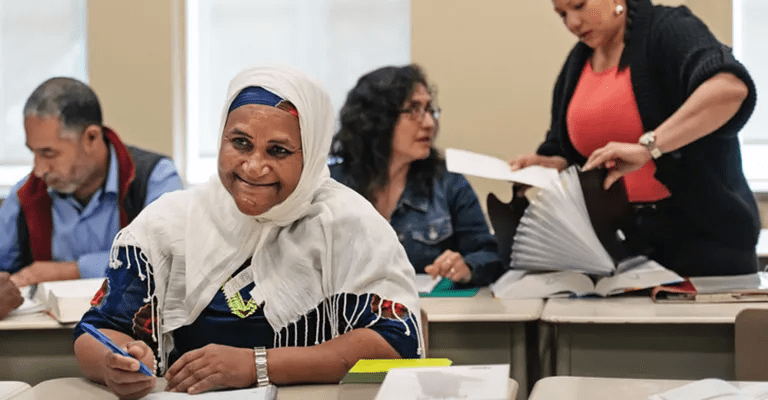
- ESL (English as a Second Language) Courses. These free classes for learning English are more than just grammar lessons; they are integrated courses that help adults acquire the language necessary for daily life, job searching, and interacting with local services.
- High School Equivalency Preparation. These programs prepare adults to pass the exam for a high school equivalency certificate (GED or Hi-SET). This is critically important for adults who did not complete high school in their home country or whose diplomas are not recognized in the United States.
Even the Harris County Public Library system initiates these programs, utilizing volunteer instructors to make education as accessible as possible across various city neighborhoods. These courses are completely free and serve as the first step toward financial independence.
The Career Pathway
For adult migrants with a higher education or professional experience who can’t apply their skills due to language barriers or lack of local certification, targeted programs are available.
Non-profit organizations, such as YMCA International Services and The Alliance for Multicultural Community Services, have developed programs that merge language training with professional skill-building.
For example, the Integrated Education and Training (IET) programs combine English language acquisition with vocational skills. Participants can simultaneously learn the terminology required for their field and prepare to obtain necessary certifications.
In Houston, migrants with medical backgrounds or experience in the oil and gas sector can access services that include counseling on foreign degree credential evaluation. These professionals can also prepare for the required licensing exams in Texas. Courses that prepare immigrants for popular certifications like Certified Nursing Assistant (CNA) or Phlebotomist are widely utilized by this group.
These initiatives are a prime example of how the Houston education sector responds to the needs of the labor market, rather than simply providing general knowledge.
Culture and Citizenship
Beyond language and professional skills, migrants require knowledge about American culture, the legal system, and local particulars. Houston’s adaptation programs incorporate these crucial aspects.
- Citizenship Preparation Courses. These help residents prepare for the naturalization exam by studying U.S. history, government structure, and citizens’ rights. This helps not only in obtaining a passport but also in becoming a full participant in the city’s civic life.
- Cultural Orientation. In these workshops, newcomers receive information about the children’s school system (through programs like the Refugee School Impact Program), safety rules—including hurricane preparedness—and details on using public transportation.
These services are often provided in partnership with legal clinics and social service agencies, ensuring a comprehensive approach to integration.
Success Stories and Challenges
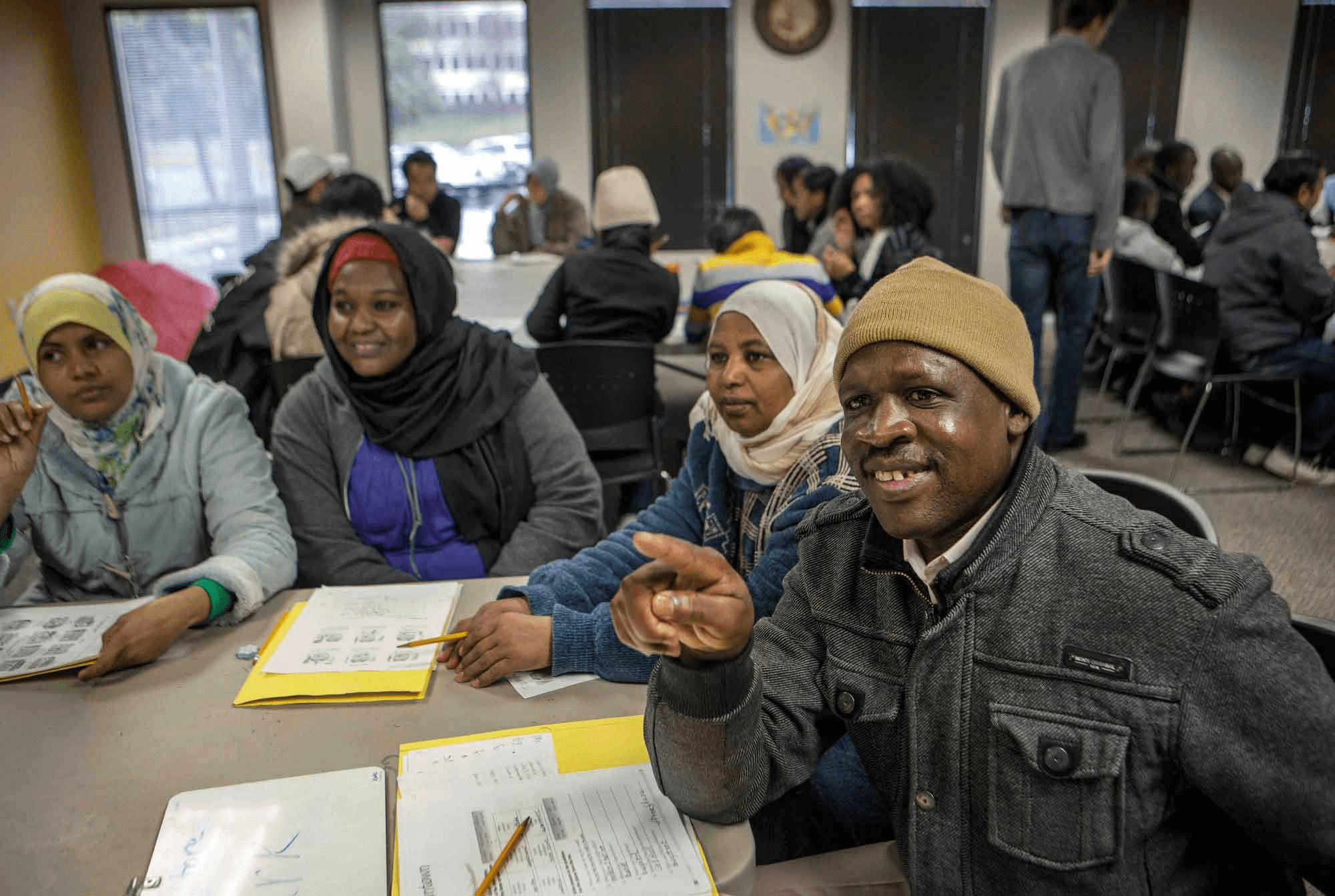
The effectiveness of these programs is confirmed by stories of achievement, though challenges still exist.
For instance, the Bilingual Education Institute (BEI) has been helping refugees and immigrants for over 35 years. Their graduates transition from low-wage labor to stable positions in various industries, demonstrating the direct impact of education on economic prosperity.
However, a significant challenge lies in accessibility. Geographical factors in the sprawling Houston area make attending classes difficult for many. Furthermore, there remains an ongoing need for continued professional development for educators who work with adult learners from diverse educational backgrounds.
| Program Component | Goal | Primary Outcome for Migrants | Organizations (Example) |
| Adult Education (AEL / ESL) | Providing basic language and mathematical literacy | Increased employability prospects | TWC, Public Libraries |
| Professional Training (IET) | Acquiring local certifications and skills | Transition to a better-paying profession | YMCA, The Alliance, CCT |
| Citizenship and Culture | Integration into the legal and social environment | Preparation for naturalization and social stability | YMCA, City of Houston ONAIC |
Ultimately, Houston doesn’t just welcome immigrants; it invests in their human capital. Thanks to the coordinated efforts of the government and the non-profit sector, adult education in the city serves as a key lever, transforming newcomers into full-fledged and productive members of American society.