

The Houston Endowment was founded in 1937. It was created to serve the residents of the city. The Houston Endowment is actively working to solve social problems in Houston. The foundation provides grants to non-profit organizations working in such areas as medicine, education, culture and social services. Read more about its history and activities on houston1.one.
History
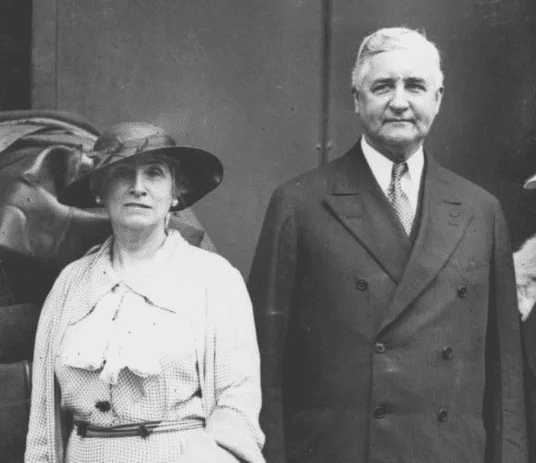
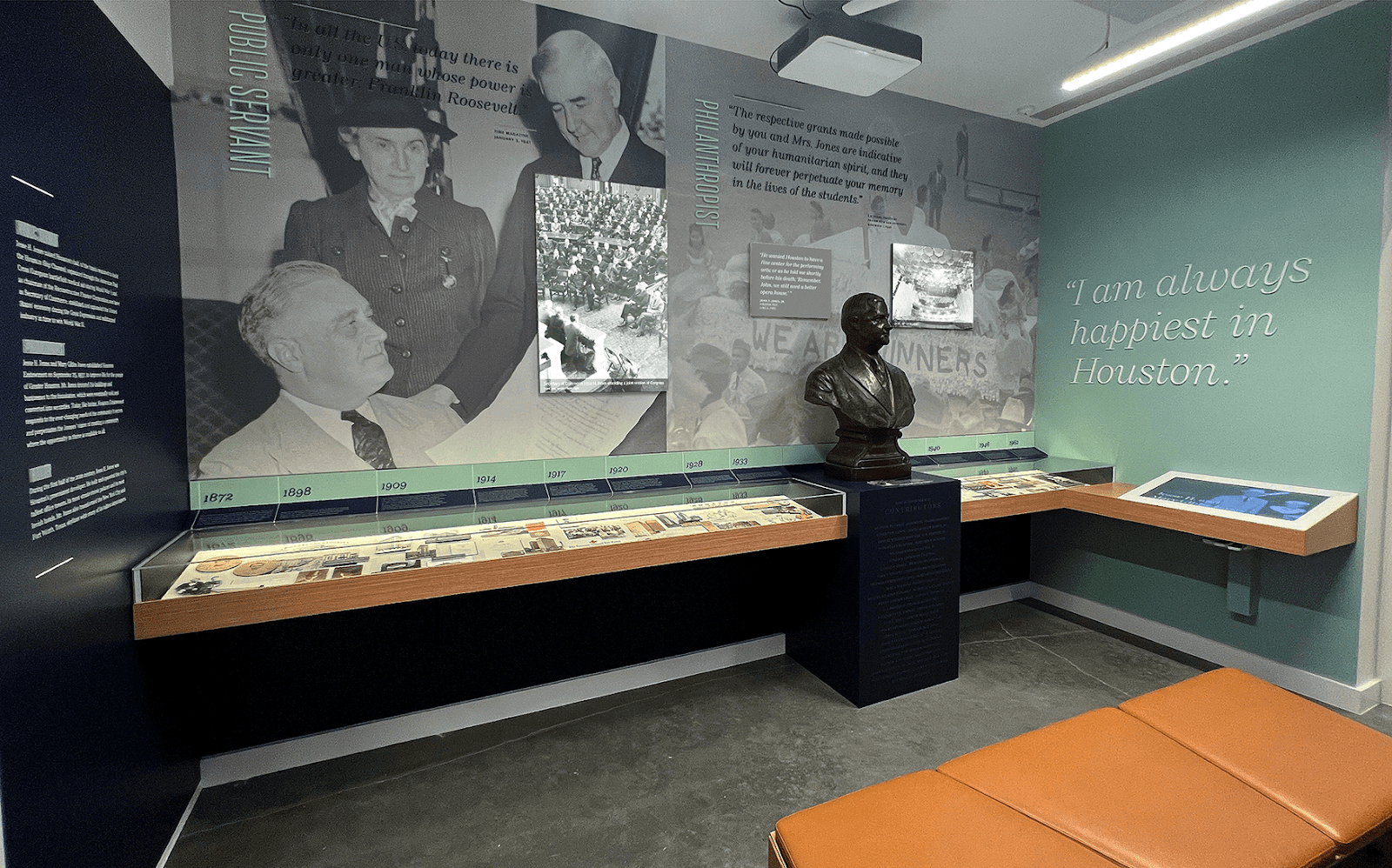
The founders of the charitable foundation were the spouses Jesse and Mary Gibbs Jones. Young Jesse H. Jones moved to Houston in 1898. The 24-year-old man had ambitious dreams. His ability to work, start-up capital and a little luck allowed him to get into the Houston elite. He ran a successful sawmill business. Later, he had a stake in the banking business. Soon, he became known in political life. He supported the Democrats. He even organized their 1928 National Convention in his beloved Houston. Despite such a wild success, he did not forget about ordinary citizens.
The philanthropist began to financially support various institutions, mainly medical. He had a dream to turn Houston into a successful city. To do this, it was necessary to develop education, medicine and culture. The businessman was also convinced that if the city prospered, he would also succeed. Thus, the idea arose to create a fund to support the development of social projects.
His wife, Mary Gibbs, supported him in this endeavor. She was an educated woman. At that time, it was difficult for women to get an education. However, Mary grew up in a family where education was mandatory for all members. She graduated from Methodist College in Waco. She became interested in books and music. Having the opportunity to travel, she was able to see the power of education and art. This influenced her choice to support her husband.
Mary Gibbs was an active community volunteer even before the creation of the Houston Endowment. The woman took an active part in the city’s social projects. She visited educational events, orphanages and hospitals. When Jesse Jones decided to create a fund, she willingly supported his idea.
The official date of the opening of the Houston Endowment is considered to be September 25, 1937.
First initiatives
The emergence of the Houston Endowment was not an impulsive or spontaneous decision. Throughout his time in public service, Jesse H. Jones was aware of all the social needs of Houston. He planned for a long time the model of the future fund. Finally, when the idea took shape, the Houston Endowment was opened.
The leading idea was to help everyone who needed support in the social sphere. Globally, this was supposed to help improve the quality of life for all residents of Houston. Philanthropist Jones understood that you can feed a hungry person by buying him a fish. However, it is better to buy a fishing rod and the needy will be able to feed themselves. This became the main principle of the charitable foundation.
The first investments were directed to scholarship programs for talented students who found themselves in financial difficulty. The philanthropist’s wife, Mary Gibbs Jones, very carefully ensured that women fell under this program. She also took under her care the students of Prairie View A&M University. They were black boys and girls. This was during the most severe segregation in Texas. By the mid-1950s, more than 4 000 students had received assistance through the activities of the Houston Foundation, who were able to study at 57 colleges and universities.

Funding of the foundation and its activities
According to Jones’s plan, the foundation was to exist and receive funds directly from donations. To encourage others, in the 1940s, Jesse H. Jones donated several of his own buildings to the foundation. The businessman also donated considerable sums every month. This example was truly inspiring. By the mid-1940s, the foundation’s annual budget exceeded $200,000.
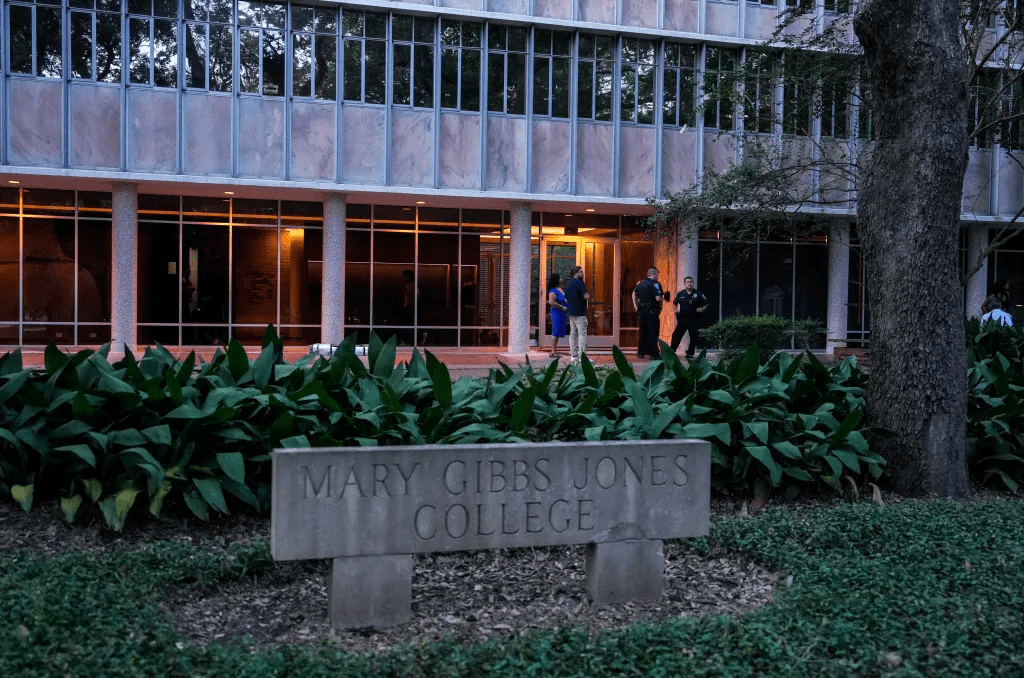
Mrs. Jones was appointed to the board of directors of the Houston Endowment in 1954. She became involved in public affairs. As a woman, Mary Gibbs Jones’s first official business was to take care of the fate of female students. She secured a grant of $1 million to build a college at Rice Institute (later to become Rice University). This initiative was aimed at ensuring that women could also live on the college campus. Her husband supported her initiative and took care of this idea. Thus, the project was quickly completed. In honor of Mrs. Jones, the college was named Mary Gibbs Jones College.
Moreover, the couple did not stop at educational projects. At the initiative of a family of philanthropists, the foundation helped develop the Texas Medical Center. Significant contributions were made to the construction of new hospitals, nursing training programs and the development of medical research.
Before his death, Jesse Jones regretted only one thing. He did not have time to implement all the planned projects. Most of all, he dreamed of an outstanding performing arts center in Houston. After his death, his nephew and head of the charitable foundation, John Jones, proposed supporting the idea of the founder and building such a center. The city council supported this plan. Thus, the Jesse H. Jones Hall for the Performing Arts was opened in Houston. This was a landmark event. From this time, the city’s cultural revival began. Gradually, Houston was turning into the southern cultural capital of the United States. World-class artists began to come to the city on tours. Local residents became interested in art.
Legacy and management of the foundation
The founder of the charitable foundation was far-sighted, so the organization owned a significant number of buildings. The authorized capital included enterprises created by Jesse Jones. They were not only in Houston. The most famous asset owned by the foundation and the founder’s most beloved project was the Houston Chronicle newspaper.
In 1969, the Tax Law changed. The foundation began to sell these buildings and organizations. The acquired funds were invested in securities. The Houston Chronicle was the last property to be sold for $415 million in 1987.
Due to the fact that the Houston Endowment has significant assets, it has a clear governance structure designed to ensure that its finances are managed and distributed fairly. The foundation is governed by an independent board of directors. Its membership is diverse. The board comprises businesspeople, community activists, industry experts and other Houstonians. Each board member is elected for a three-year term. They can serve no more than three terms.
The Houston Endowment has never had a single scandal in its history. This proves that this form of governance is the best. It helps to avoid abuse and conduct the activities of a charitable foundation transparently. The Houston Endowment regularly publishes reports on its activities and financial statements.
Current challenges
Thousands of people have received assistance during the foundation’s existence. The foundation has been able to change the lives of many Houstonians for the better. The organization has met many community needs. Thanks to the Houston Endowment, almost $2 billion has been spent during its existence. This makes it one of the largest charitable foundations in Texas. In the modern world, the foundation’s goal remains unchanged. All its activities are aimed at supporting organizations and people. They are aimed at improvement of all systems of Houston to realize the Jones couple vision of a vibrant and thriving city.