

In the twenty-first century, postal services are taken for granted. Online purchases, gifts from abroad and other items may arrive on our doorstep in a matter of days or even hours. However, this has not always been the case. In the past, the mail took months to arrive, and receiving or sending a simple letter was an expensive pleasure. Learn more about the history of post offices in the United States and Houston’s most famous post office at houston1.one.
How did the postal service in the United States come about?
The first post office in the contemporary United States, Fairbanks’ Tavern, opened on November 5, 1639, in Boston, Massachusetts. This location was used to receive and send letters abroad. The office was owned by Richard Fairbanks.
From 1753 to 1774, while managing the British colonial Postal Service, the founding father of the United States, Benjamin Franklin, improved the courier system. This accelerated delivery between the 13 British colonies in North America that existed before independence in 1776 and the creation of the US State. The mail was delivered from Philadelphia to New York in less than 33 hours.
The Franklin postal system also pioneered the concept of uniform postal charges, making sending and receiving mail more convenient. Previously, postal rates varied according to the distance and weight of mail. Interestingly, traveling the post roads helped Franklin to envision how the new nation could develop independently of the Kingdom of Great Britain.
In the early 1770s, Franklin’s patriots established underground postal networks in all the colonies, and later the Constitutional post. In 1775, even before the Declaration of Independence was signed, the Constitutional post office was transformed into the U.S. Post Office, which supported the emerging democracy. Benjamin Franklin was appointed the country’s first postmaster general.
In 1792, following the passage of the Postal Service Act, the Post Office Department was founded. The mail was key in informing voters, igniting America’s dynamic political culture and facilitating all the required correspondence to establish a state.
In 1831, the United States had twice as many post offices as Britain and five times more than France. Horse-drawn carriers delivered mail from St. Joseph (Missouri) to Sacramento (California) in just 10 days.
By the 1840s, the post office was experiencing a crisis. Citizens grew dissatisfied with the high expense of sending letters, therefore they increasingly switched to cheaper private carriers. In response, Congress turned the post office into a public service, and in 1845 reduced the postal fee for letters to 5-10 cents.
Mail was delivered by horse-drawn vehicles, steamboats and stagecoaches, and in the late nineteenth and early twentieth centuries, couriers carried letters and packages to Americans in Alaska by dog sleds. In 1869, the transcontinental railroad was finished, ushering in a new era of communication. Cars were first used for this purpose around 1910.
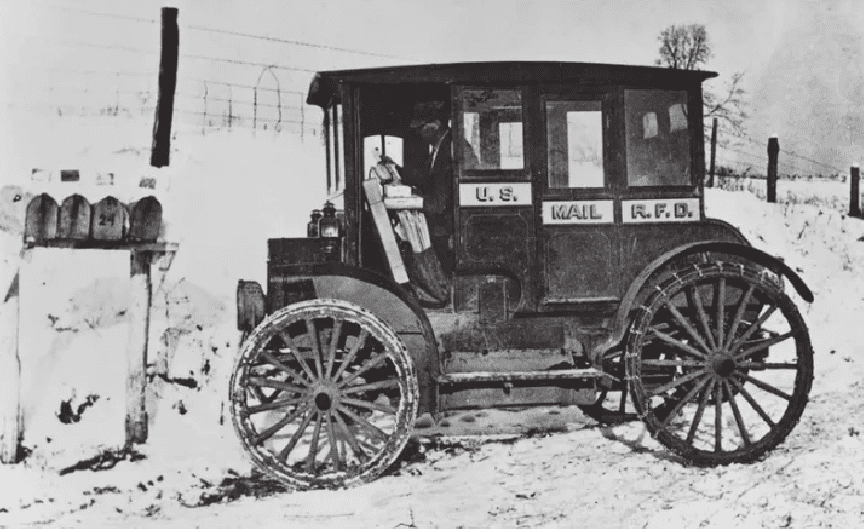
When America was divided by the Civil War from 1861 to 1865, President Lincoln’s postmaster General Montgomery Blair modernized the mail system. In particular, he developed the railway post service and permitted the first money transfers. The post office was the first major organization in the United States to hire a significant number of women and African Americans.
In 1896, free mail delivery to rural areas was introduced, and in 1913 parcels began to be sent to villages. During World War I, aviation was first used for postal delivery. Following World War II, the volume of mail doubled.
In March 1970, outraged by low wages and poor working conditions, New York City post office workers went on strike. They were later supported by almost 210,000 postal workers around the country. The strike resulted in the adoption of the Postal Reorganization Act.
In 1971, the postal service was renamed the United States Postal Service (USPS), with its headquarters in Washington. It is an independent agency, yet it is nonetheless subordinate to the United States Federal Government. The Postal Service is mandated to serve all Americans, regardless of where they live, by offering services at uniform rates.
USPS main office in Houston
The first ordinary post office in Texas opened on December 17, 1875, in the Concho Valley, in the former City of Ben Ficklin. As for the first post office in Houston, the exact information about it has not been preserved. However, it is known that the main office of the USPS was established here in 1934, in a depot near Central Station.
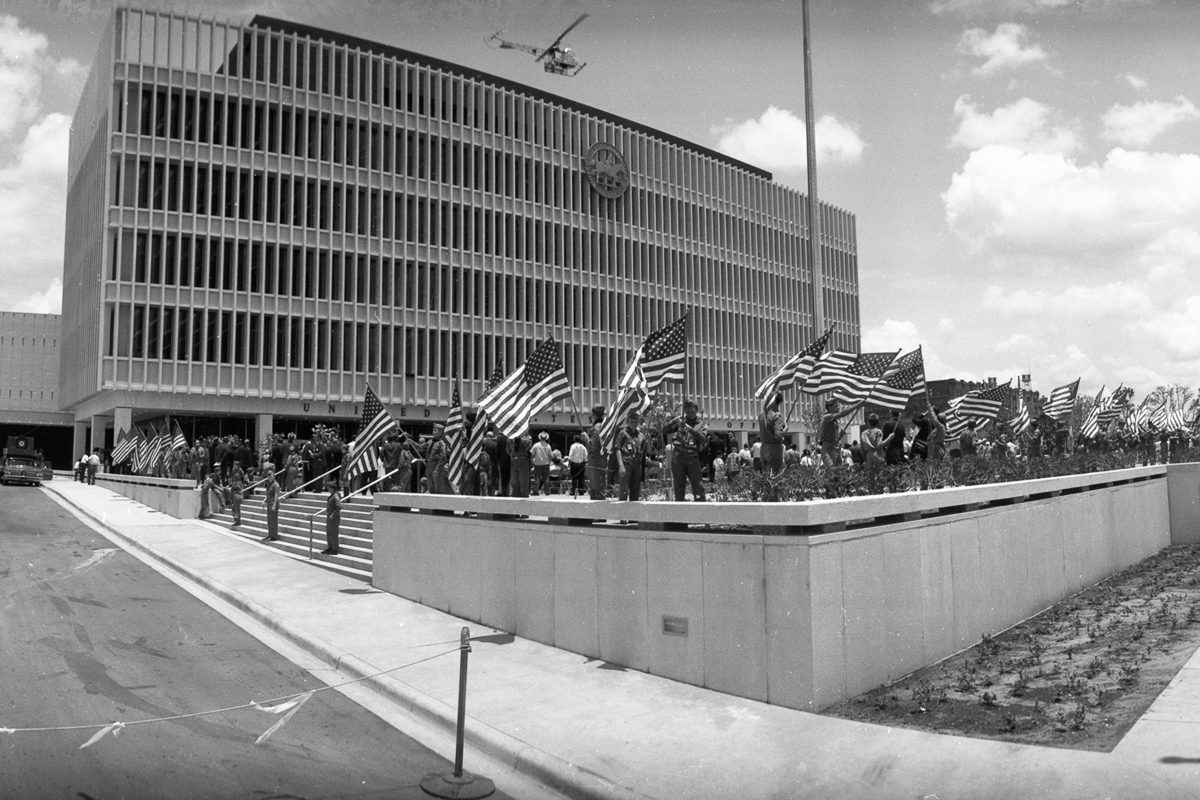
In the late 1950s, the US government purchased and dismantled Central Station. The new post office building incorporated the original 1930s depot architecture within its brick walls. In 1961, the building was opened to the public. During the opening ceremony, the post office held an event on the square. It featured Boy Scouts carrying American flags and lions from the local zoo.
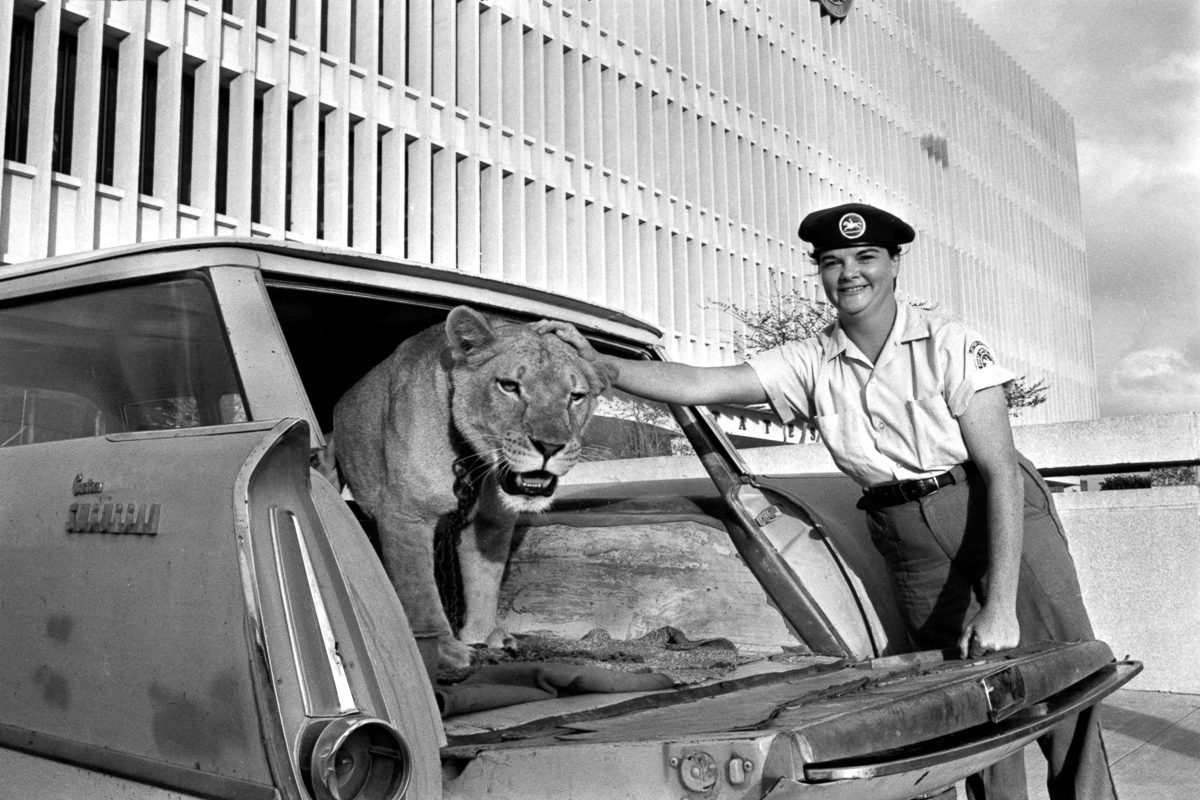
At the time, the United States competed with the USSR on cultural, military and technological fronts. As a result, the building met FBI security standards, in particular, it had several nuclear bomb shelters. The structure demonstrated American industrial might and served as a powerful mail sorting and distribution system. The postal sorting area had more than five miles of conveyor belts that transported packages.
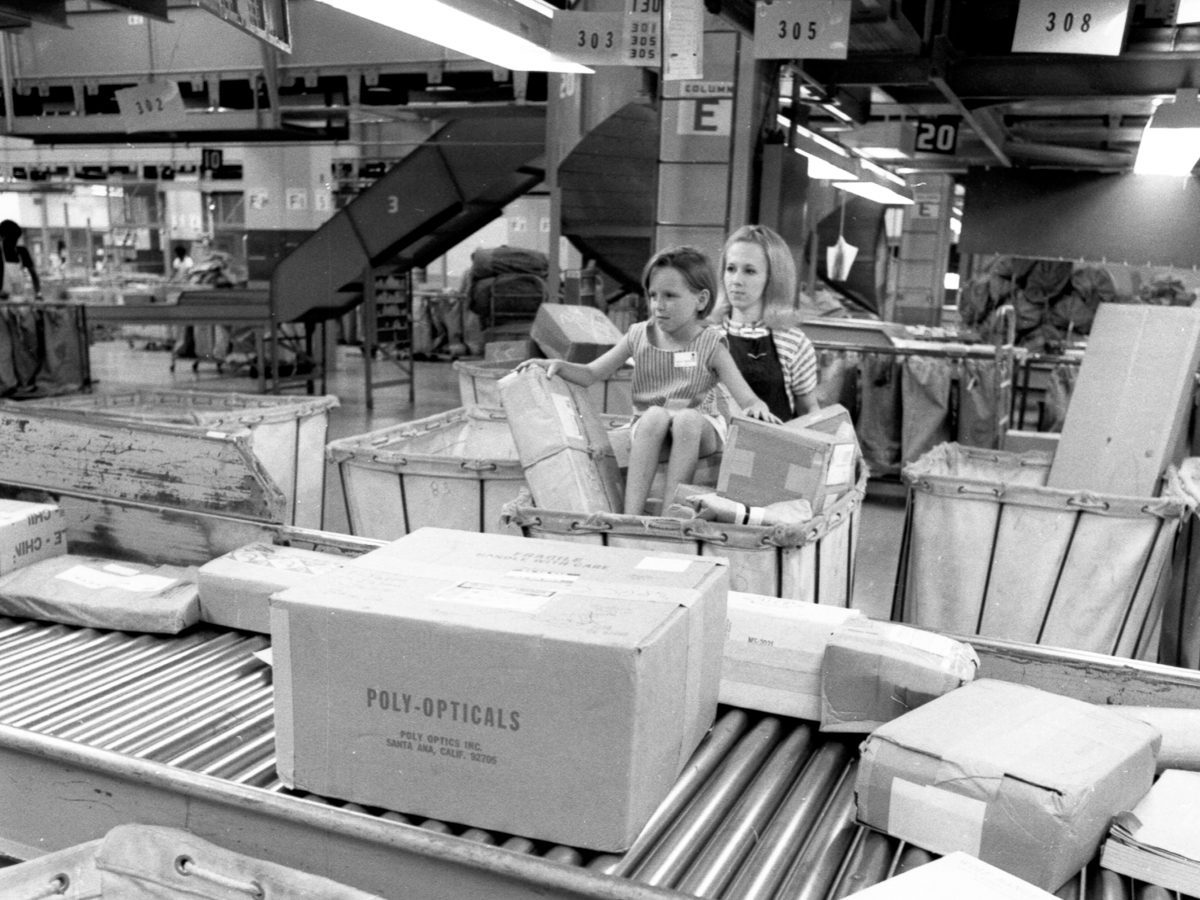
The exquisite interior of the office building featured minimalist furniture. Also, the facility was equipped with “spy tunnels”. They were designed so that managers could secretly monitor employees to find out if they were stealing cash or other valuables sent by mail.
Renaming
In 1984, 22 years after its establishment, the post office was renamed in honor of Barbara Jordan, the first African American woman elected to the Texas Senate and the U.S. House of Representatives.
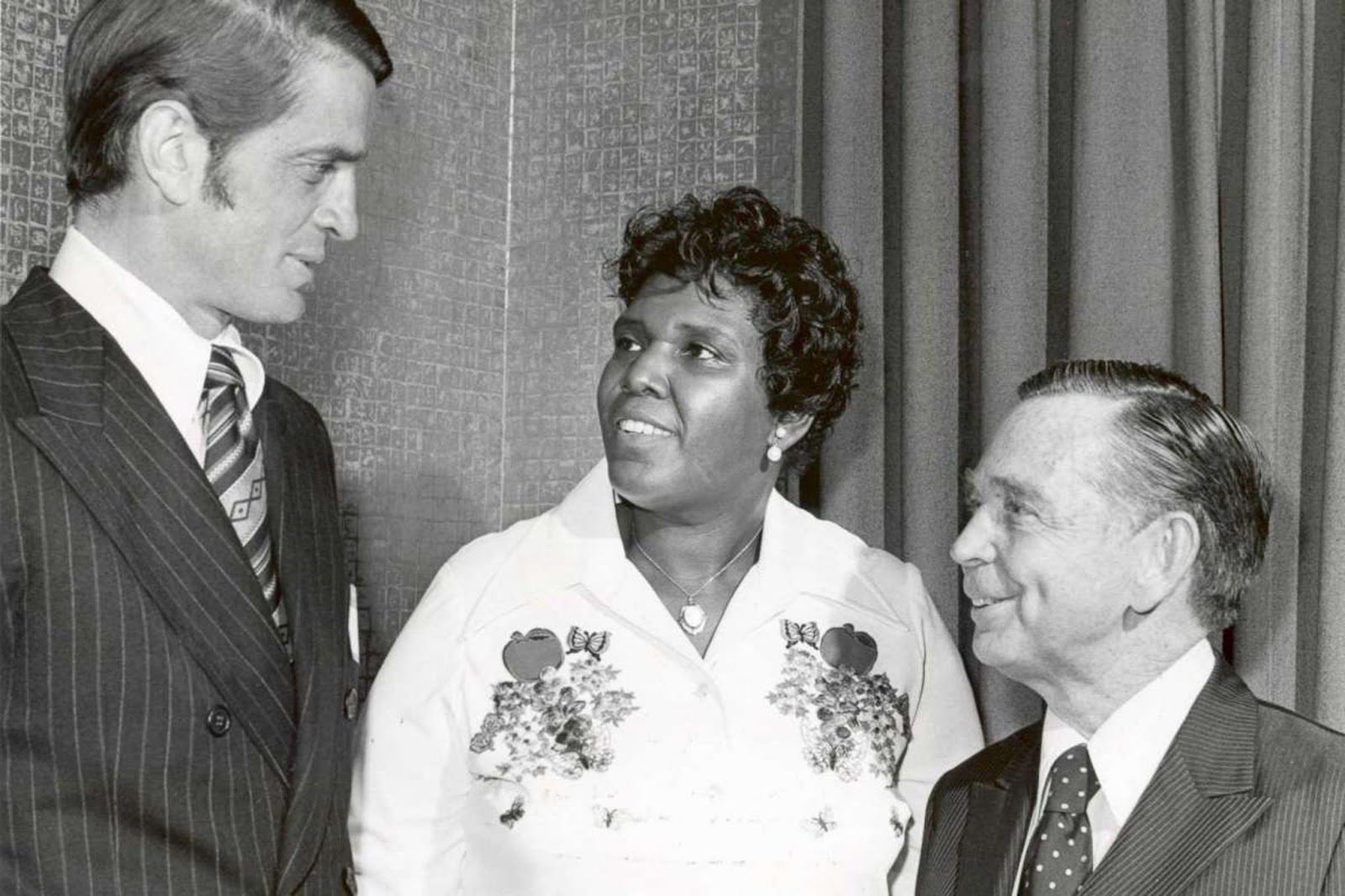
Jordan was more than simply a symbolic figure. She was an effective politician who introduced legislation to improve the lives of poor, disenfranchised citizens and members of Texas’ minorities. The politician gained national recognition for her speech to the House Judiciary Committee during the impeachment trial of President Richard Nixon in 1974.
Following her political career, Barbara started teaching ethics at the Lyndon B. Johnson School of Public Affairs at the University of Texas (Austin). The civil rights figure died of blood cancer at the age of 59.
In 2015, the US government closed the Barbara Jordan Post Office and sold the building to Lovett Commercial. At the time, it employed almost 2,000 people who processed mail at night. The U.S. Postal Service relocated operations to the Sam Houston station at 1500 Hadley Street.
The new life of the department
In 2019, the former Barbara Jordan Post Office was converted into the POST Houston entertainment venue. It is a multi-purpose facility that includes restaurants, shops and entertainment.
As of 2023, it is home to America’s largest rooftop farm park, where fresh fruits, herbs and vegetables are cultivated for use in many POST Houston restaurants. The venue is occasionally used for concerts and exhibitions.
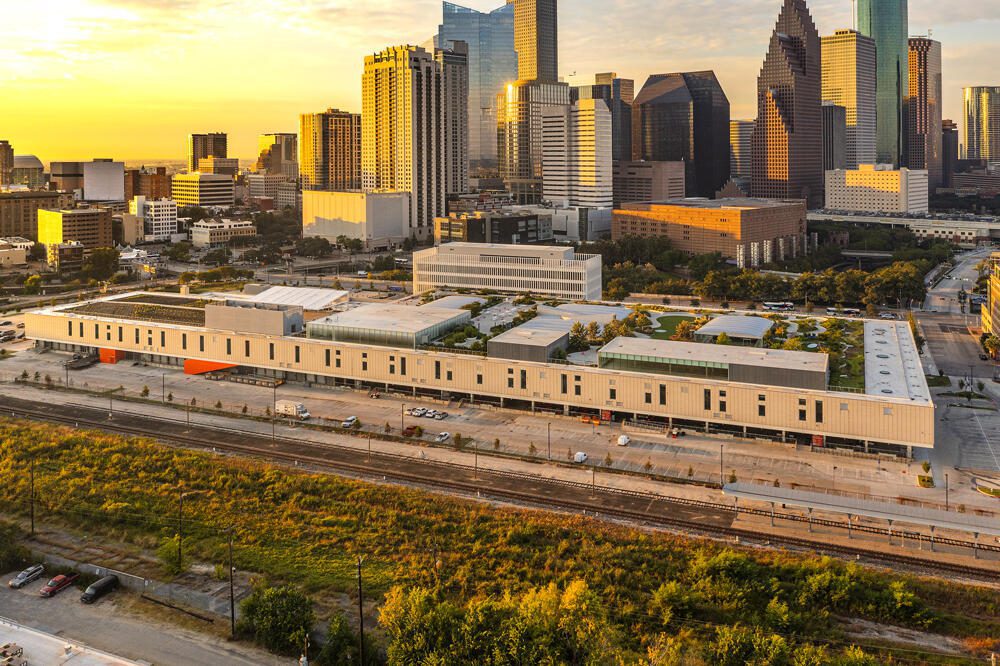
This building, built during the Cold War, serves as an important historical monument. Columns, bomb shelters and hidden internal tunnels remind us of the past, contrasting with modern elements.