

The University of Houston is a public educational institution that consists of the main and central campuses in Houston and branches in Texas cities like Clear Lake and Pasadena. Additional facilities are located in Cinco Ranch and Sugar Land, also in Texas. The university offers undergraduate and graduate programs in various fields such as architecture and design, arts, business, education, engineering, public relations, hospitality management, social sciences, natural sciences, law, medicine, mathematics, nursing, optometry, pharmacy, and technology. More on houston1.one.
Supply Created by Demand
The 1920s were a time of economic prosperity for Houston, marked by oil discoveries, the growth of imports and exports, and the emergence of skyscrapers on the city’s skyline. Over the decade, Houston’s population more than doubled. At the time, racial segregation policies were still in place across the U.S., and Houston’s Independent School District (HISD) built four new high schools—two for Black students and two for White students.
In 1923, Houston’s school system separated from city management, and the following year, Edison E. Oberholtzer became superintendent of the Board of Education. Oberholtzer believed that after World War I, expanding public schooling was crucial. He gathered high school students from different schools to discuss the idea of establishing a junior college that would provide students with an opportunity to continue their education beyond high school.
At the time, few students could afford to attend colleges outside Texas, and gaining admission to Rice Institute (now Rice University)—the only higher education institution in Houston at the time—was difficult. Many students also worked part-time and couldn’t commit fully to their studies. To offer a solution, Oberholtzer met with the Houston Board of Education.
As a result, in 1927, Houston Junior College (HJC) was established—a higher education institution providing professional training for technical careers and supporting roles in fields like engineering, accounting, business administration, nursing, medicine, architecture, and criminology.
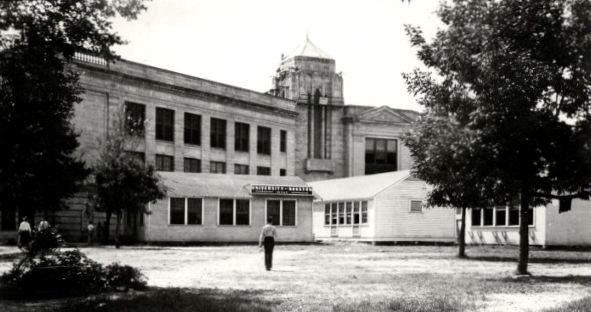
The college was located on the campus of San Jacinto High School and initially offered only evening classes for future teachers. The first class had 232 students, taught by 12 instructors. Edison E. Oberholtzer became the first president of HJC.
Gaining University Status
In 1934, the junior college transitioned into the University of Houston. The four-year institution began with 682 students—still based at San Jacinto High School. There were 39 instructors teaching in three colleges and schools: the College of Arts and Sciences, the College of Public Service, and the General College.
The first campus of the University of Houston was established in 1934 at the First Baptist Church. The following fall, the campus was relocated to another Baptist church on Main Street, where it remained for five years. In May 1935, the university began holding classes at the Miller Outdoor Theatre.
The need for a permanent building for the university soon arose. Heirs of philanthropists J.J. Settegast and Ben Taub donated a plot of land for the university. In 1938, Hugh Roy Cullen made a significant donation, leading to the construction of the first building. In June 1939, the Roy Gustav Cullen Memorial Building was officially opened. Within a year, the university had over 2,000 students enrolled.
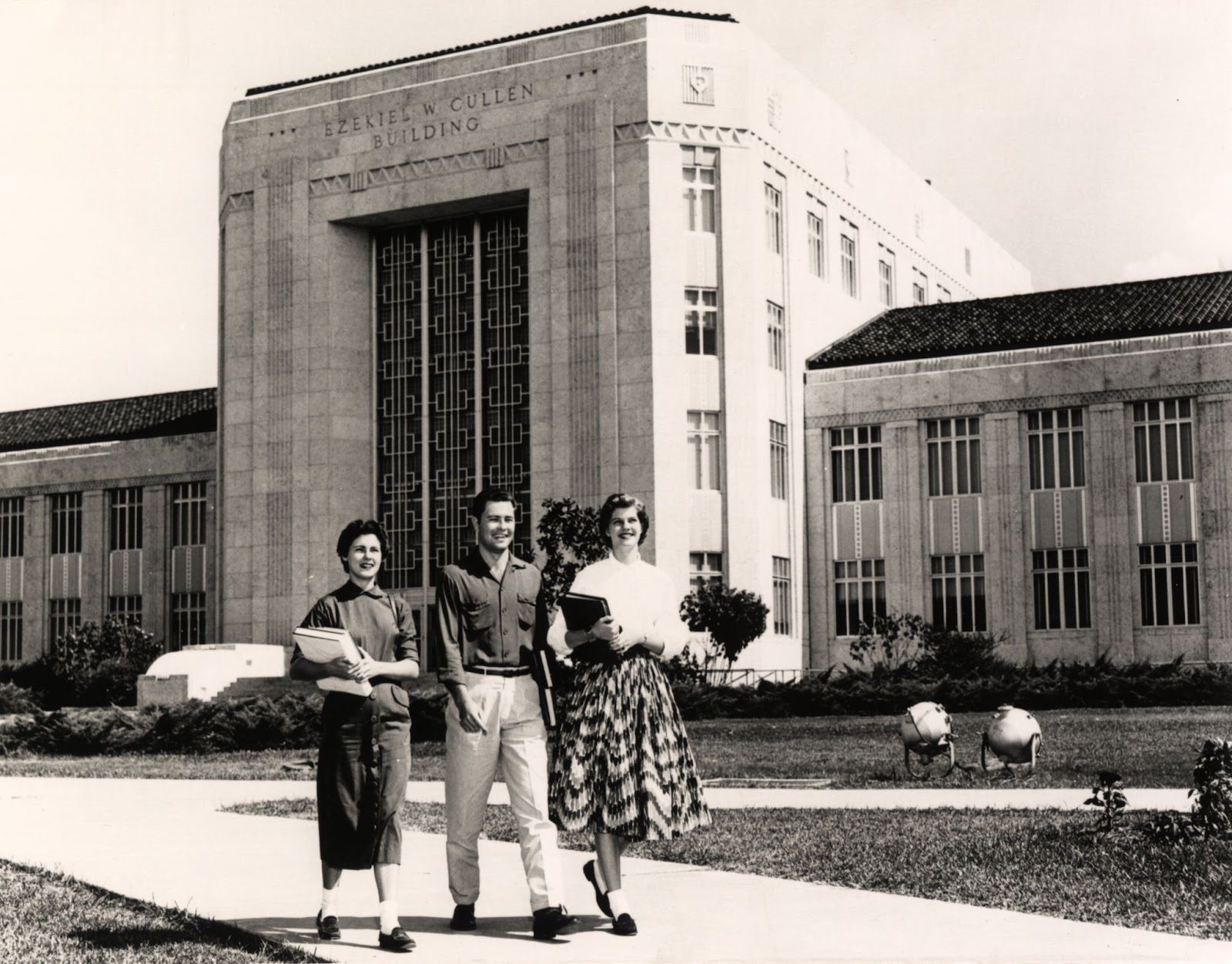
In 1945, the university became a private institution, and the Houston School Board lost control over it. Two years later, a law school was established, and by 1950, the university had 12 permanent buildings. Over 300 faculty members taught full-time courses. By 1951, the University of Houston had grown into the second-largest university in Texas.
Transition to State Ownership
In 1953, the university launched KUHT, the first educational television station in the United States. Around this time, financial difficulties arose, leading to the decision to transition the university into a state institution. In 1963, the University of Houston became a public institution. In 1974, the downtown campus was established when the university absorbed South Texas Junior College.
The Campus Today
The University of Houston offers over 300 undergraduate and graduate programs and includes professional schools such as the Gerald D. Hines College of Architecture, the C.T. Bauer College of Business, the Conrad N. Hilton College of Global Hospitality Leadership, the Law Center, the College of Medicine, the College of Nursing, the College of Optometry, the College of Pharmacy, the Graduate College of Social Work, and the Jack J. Valenti School of Communication.
Traditions
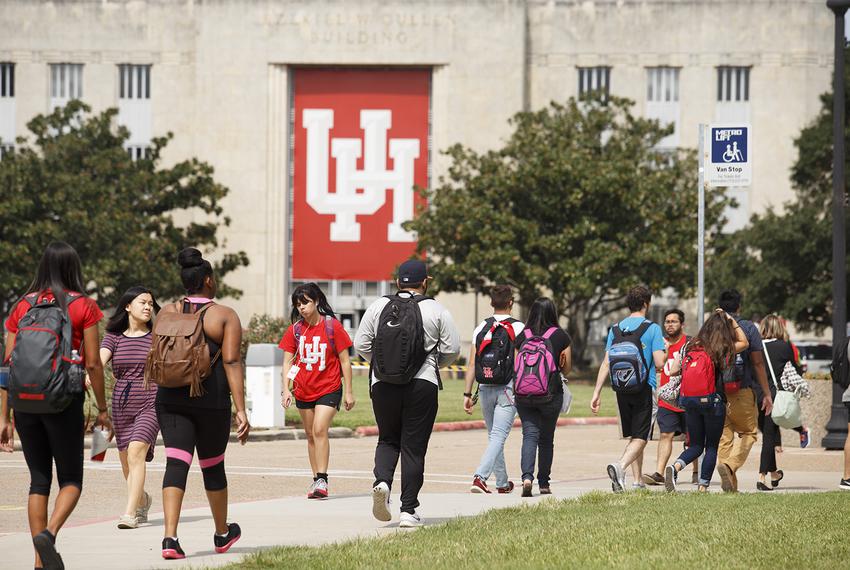
The University of Houston fosters a sense of community through a wide range of traditions. Most of the individual colleges have their own unique traditions, such as The Follies of the Law Center, where students parody their professors, or the annual Engineering Golf Tournament, where players raise funds to support the College of Engineering.
The university also holds the Frontier Fiesta, an annual student-run festival that transforms part of the campus into a town where students showcase their talents. Every evening during the festival, there are free live concerts, variety shows, carnivals, multicultural performances, and a fiesta featuring barbecue and baking contests.
Each semester, students are awarded university rings during an official ceremony. Current students wear their rings with the face turned inward, while graduates wear them outward.

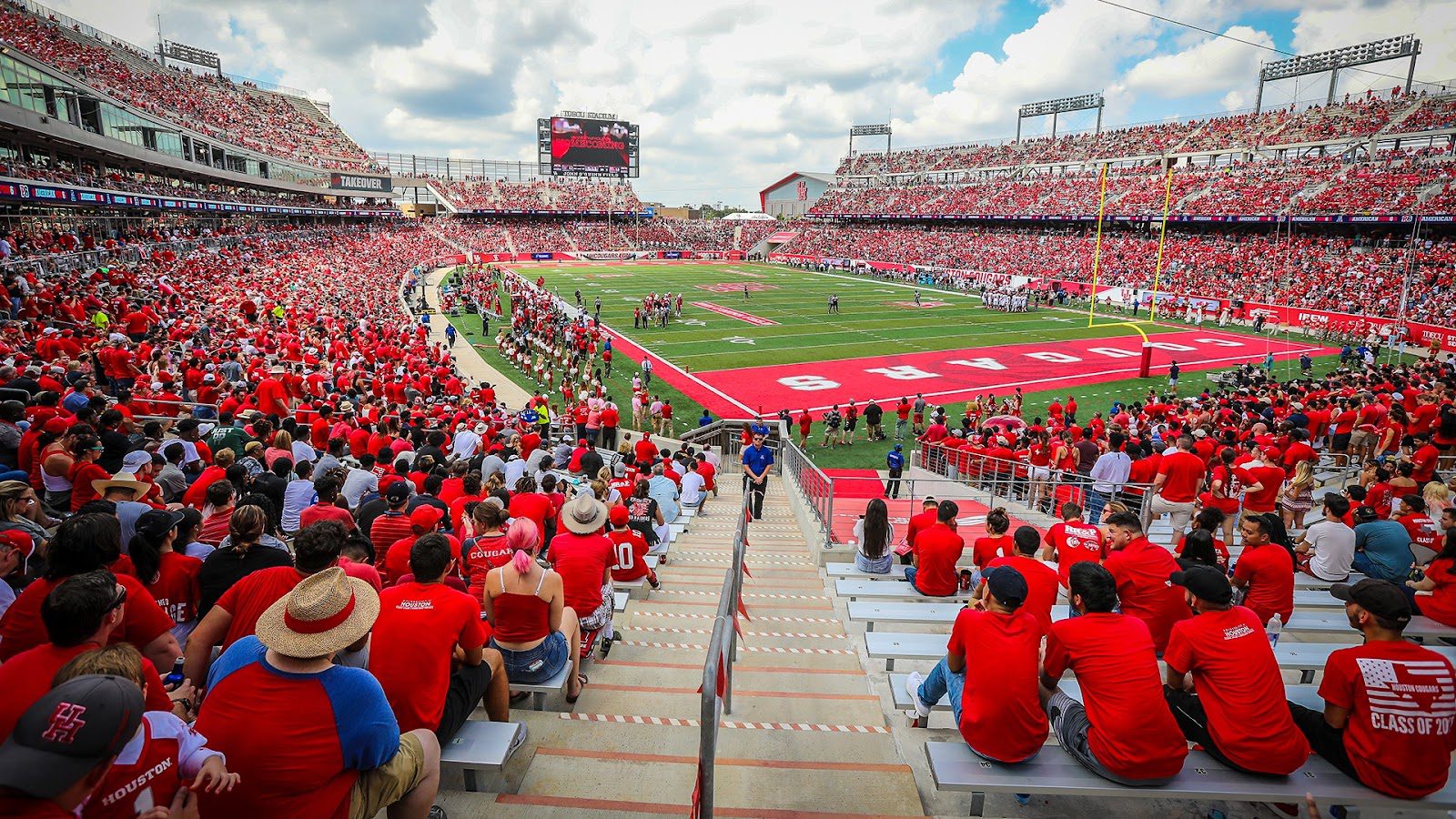
During sports events, the campus gathers around Shasta the Cougar, the university’s mascot. From 1947 to 1989, five live cougars served as mascots, but since the death of the last one, costumed mascots have taken over. Fans support the university’s sports teams by showing the “cougar sign”—with the right hand’s ring finger folded down to the palm, symbolizing pride for the university. This tradition began in 1953 when Shasta I lost a toe in a cage door, and rival fans mocked the injury, leading Houston students to adopt it as a symbol of pride.
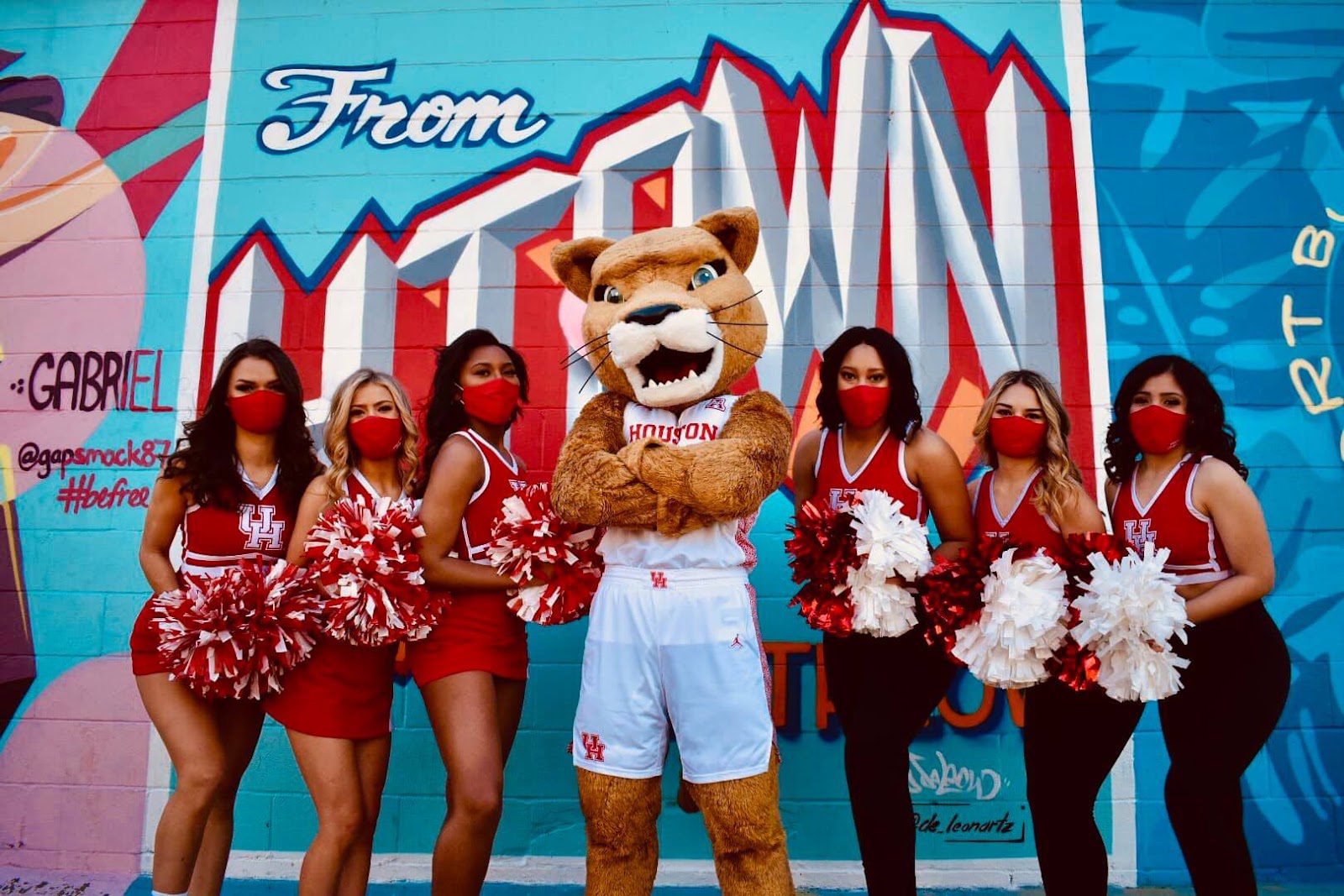
The official colors of the University of Houston are red and white. The crimson red represents courage and strength, while white symbolizes goodness and the willingness to help others.
Notable Alumni
The University of Houston has produced many notable alumni, including:
- Jim Parsons – Actor known for his role as Sheldon Cooper in The Big Bang Theory.
- Elvin Hayes – NBA basketball player who played for teams like the Washington Wizards.
- Hakeem Olajuwon – Nigerian-born NBA basketball player who played for the Houston Rockets.
- Carl Lewis – Track and field athlete, 9-time Olympic champion and 8-time world champion.
- Julian Schnabel – Painter, filmmaker, and screenwriter.
- Elizabeth Warren – Politician and lawyer.
- Lizzo – Singer, rapper, and actress.
- Kenny Rogers – Singer, pianist, composer, lyricist, and producer.
- Pauline Oliveros – Accordionist and key figure in experimental music.