We all come from childhood. In order for memories of this period of life to be bright and positive, it must be filled with pleasant emotions. The easiest way to do this is with the help of amusement parks, which give a lot of positive and unforgettable impressions at a young age. In Houston, AstroWorld was such a place for a pleasant pastime with friends, marking events and joint celebrations. Read more about its history on houston1.one.
Ambitious plans and their implementation
This name was chosen to follow the trend of the city. Houston had already become the space center of the USA. The idea to create such a grandiose attraction by the standards of that time belonged to local businessman, philanthropist and former mayor of the city, Roy Hofheinz. The new AstroWorld building was to organically complement the already existing Astrodome, the world’s first domed multipurpose stadium, which was quite popular. Hofheinz, inspired by the success of his previous project, decided to expand and continue construction. Thus, the idea of an amusement park for children was born.
The city allocated a 23-hectare plot for the construction of AstroWorld. Experienced specialists were asked to develop the project. Randall Duell, who had already created similar projects and successfully completed orders for Houston, was appointed general contractor.
In addition to the project, it was necessary to solve the problem of the road to the future park. AstroWorld was to be located in a place that could be reached by crossing the expressway. This created quite a problem. However, Roy Hofheinz was already passionate about this idea and could not stop. The first $25 million of investment was directed to landscaping and the construction of a long pedestrian viaduct. The problem was solved. This construction went down in history as the first private public crossing over a federal highway.
Then, the construction of the park began. For this purpose, several well-known companies in the USA were invited, each of which was engaged in its own business. Among all the organizations involved, it is worth noting the company I.A. Naman & Associates, which was engaged in air conditioning. They used the latest developments not only to cool the hot Houston on a summer day but also to zone each attraction separately. It turned out very well.
In addition to the titled specialists, the mayor of Houston involved the city’s students in the work. It is known that students from the universities of Houston and Rice made a large-scale and three-dimensional copy of the park. They also developed maps for visitors. The AstroWorld model measuring 2.4 X 3.0 meters was created as an advertising overview of the park and was placed at the entrance.
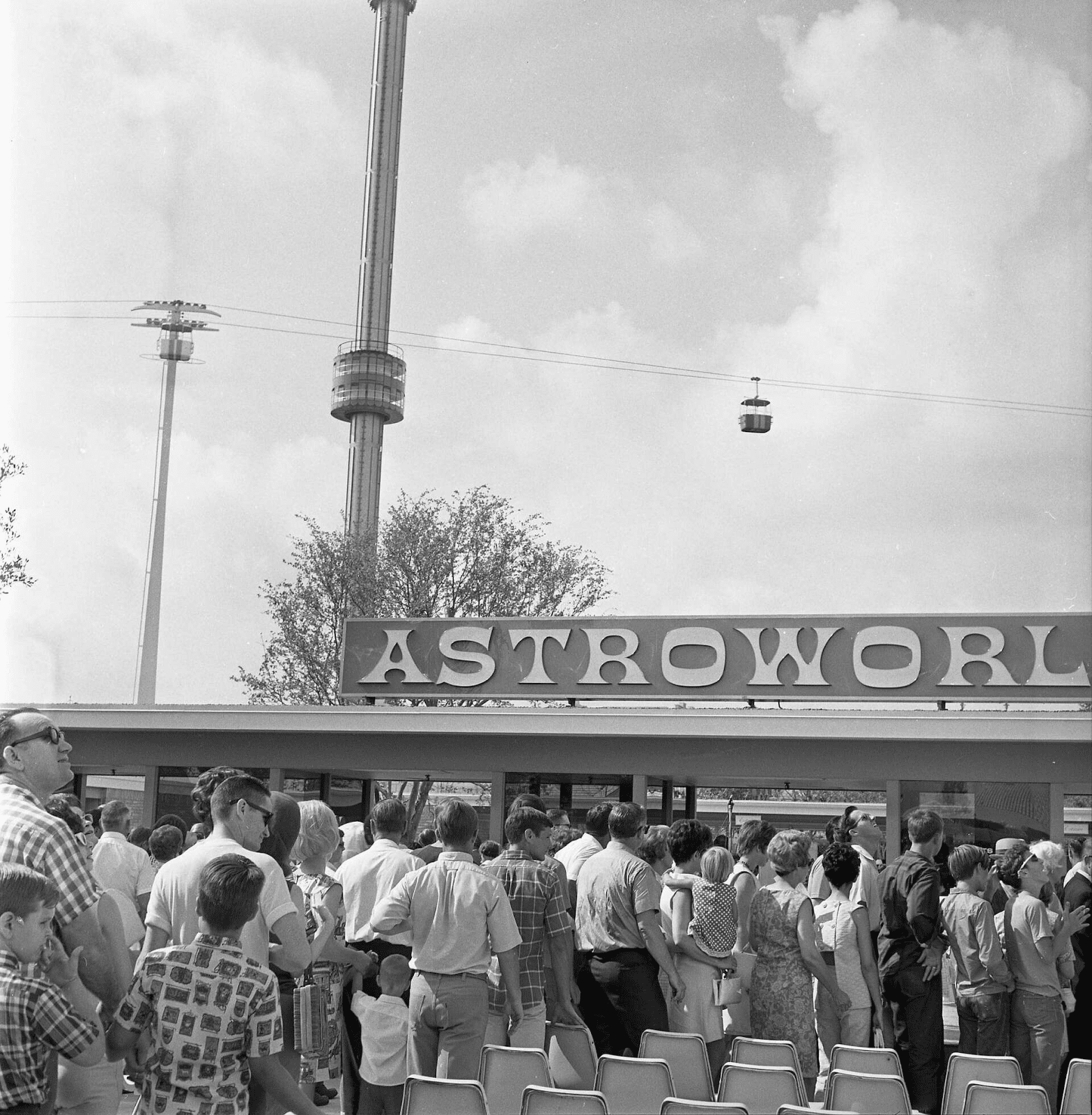
About $20 million and a year of time were spent on the construction of the ambitious project of the mayor of Houston. The park opened on June 1, 1968. 16 different attractions were available to visitors. During the first weekend, 50 thousand guests visited the park. Very quickly, AstroWorld became a favorite place for children and youth. Caring parents with their children from all over Texas came to visit it.
Fantastic characters as symbols of the park
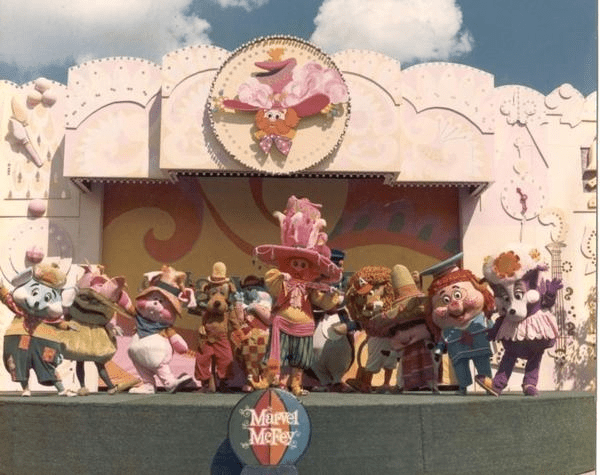
The park had a whole team of animal symbols. This cohort was led by Marvel McFey, who was nicknamed the Ambassador of Happiness. Winston Wolf was the sheriff. They were accompanied everywhere by mischievous piglets, Quiz, Chiquito, and Harpo, the prudent penguin Percy and the mischievous rabbit Flopper. In addition, there were Pierre Le Rat, a resident artist, Beethoven Bear, who was a checkers champion, as well as Samantha Skunk, Frieda Frog and baseball player, Lester Lion. All these characters were liked by the youngest visitors of the amusement park. Those who were more daring could even try to compete with the animals on various attractions. These characters had beautiful, bright costumes. They were often used at city events outside AstroWorld.
This staff of fairy-tale characters was expanded first in 1984 by the Looney Tunes characters, led by Bugs Bunny. In early 1990, the owners of the park signed an agreement with DC Comics, which owned the rights to numerous comic book characters. Thus, the amusement park became the place of residence of most of the children’s idols.
However, after the initial excitement, AstroWorld gradually began to lose its fans. The entertainment was quite simple here. Due to the decline in popularity and the stroke of the head of the family, which confined Roy to a wheelchair, the Hofheinz family was forced to sell the amusement park.
New owner and new entertainment
In 1975, the amusement park was bought by the Six Flags company. They began significant investments in the development of AstroWorld. Among the first major changes was the installation of a new attraction, the Texas Cyclone. These were innovative high-speed roller coasters, which, according to Robert Cartmell, became the best in the world. Two years after that, a new playground was built, The Magical World of Marvel McFey. A year later, the owners created a grandiose attraction, Greezed Lightnin’. These were new coasters with a dizzying loop and extremely fast acceleration.
In 2002, the owners of AstroWorld acquired the neighboring water park, WaterWorld. They were combined, expanding the space for visitors. However, to get to the newly acquired park, you had to pay an additional entrance fee.
At the peak of their popularity in the 1980s, AstroWorld and WaterWorld had almost 3 million visitors. In 1997, the amusement park took 28th place among the most visited theme parks in the United States. However, this was only the tip of the iceberg. Six Flags had huge losses. It became known that in the first half of 2003 the company had suffered losses of more than $122 million. Every year, the situation only worsened. As CFO, James Dannhauser, explained, the cost of the land under AstroWorld was much more expensive than the total revenues. It was not feasible to continue to maintain and modernize the park. Thus, the company decided to stop operating it. AstroWorld’s last day of work was October 30, 2005.
Most of the rides were sold during a three-day auction. They were moved to other amusement parks. As for the territory where AstroWorld was located, the owners planned to receive $150 million for it. However, after the demolition of the park and clearing the site, which cost $20 million, the land was sold for $77 million only.
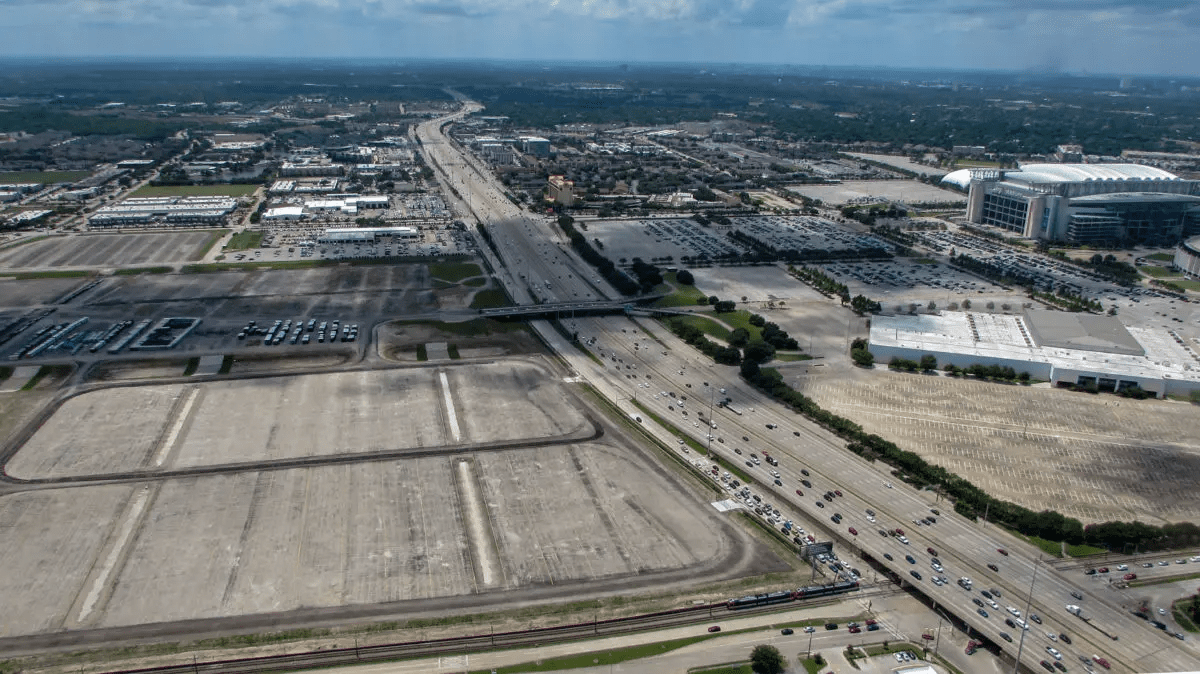
Despite the desire of investors to purchase this plot, it remained empty for a long time. Occasionally it was used as a parking lot for the neighboring NRG Stadium. In 2021, an investor expressed a desire to build residential, commercial and entertainment buildings on the site of the former park. However, as of 2024, the ideas remained unrealized. Thus, ended the story of AstroWorld, a favorite place of several generations of Houston children.
AstroWorld’s legacy
However, the theme park hasn’t completely faded into oblivion. Echoes of AstroWorld’s former glory still resonate today. The amusement park was the subject of a children’s TV special, The Pied Piper of Astroworld.
A model of AstroWorld, built by Ed Henderson and located at the entrance to the park, is on permanent display at the Houston Central Public Library.
Since 2015, the Moving Sidewalk bar has been serving up an AstroWorld-themed cocktail menu.
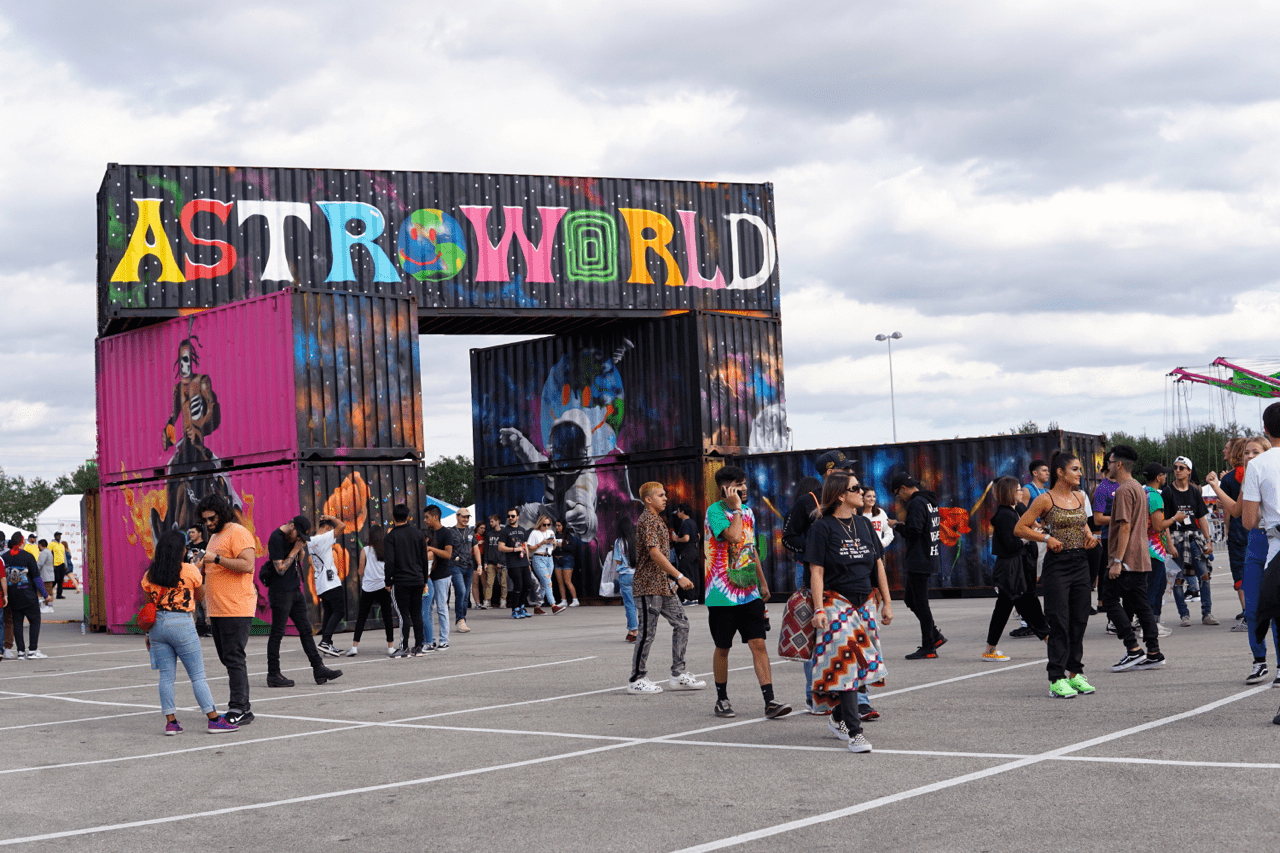
Houston rapper Travis Scott released an album called Astroworld in 2018. Travis even organized a festival to bring back the beloved spirit and nostalgia for the amusement park.