

Today, Houston is primarily known as a hub for aerospace, medical innovation, and NASA’s space programs. However, a century ago, it was a completely different city. Picture a bustling industrial beehive where oil smelled like the future, and every entrepreneur dreamed of striking it rich.
Old Houston holds countless hidden stories, no less captivating than the chronicles of the modern metropolis. So, let’s dive into the history of how Texas’s largest city came to be, courtesy of houston1.one.

Black Gold Transforms the City
The story of industrial Houston kicks off with a genuine oil boom, thanks to a mix of luck and prime geographical positioning. In 1901, a powerful gush of oil unexpectedly erupted from the ground near Beaumont, marking the dawn of a new era not just for Texas, but for the entire American South. Houston, then a relatively modest city without grand ambitions, suddenly found itself at the epicenter of a global energy revolution. What were once swampy expanses and cotton fields quickly morphed into a thriving oil industry hub, reshaping not only the city’s economy but also its culture, architecture, and way of life.
A Source of Capital and Urban Change
During the first two decades of the 20th century, Houston saw a rapid surge in oil companies. Giants like Texaco, Exxon (then Humble Oil), and Shell chose the city as one of their key bases. By the 1920s, Houston had cemented its reputation as a strategic energy nerve center of the Southern U.S. As global demand for oil soared, profits from “black gold” fueled a monumental infrastructure boom:
- Miles of new railway lines were constructed, linking urban oil depots with ports and inland areas of Texas.
- The Houston Ship Channel underwent active expansion, eventually becoming one of the largest in the U.S.
- New residential areas sprang up for industry workers, students received scholarships from oil funds, and local universities gained donor support for developing their engineering departments.
The Silhouette of a New City
Old Houston’s architecture responded to the oil boom with equal vibrancy. Downtown, oil company skyscrapers, built in Art Deco or Modern styles, began to pierce the skyline. For instance, the Gulf Building, completed in 1929, became Texas’s tallest skyscraper at the time—a potent symbol of the wealth flowing from oil.
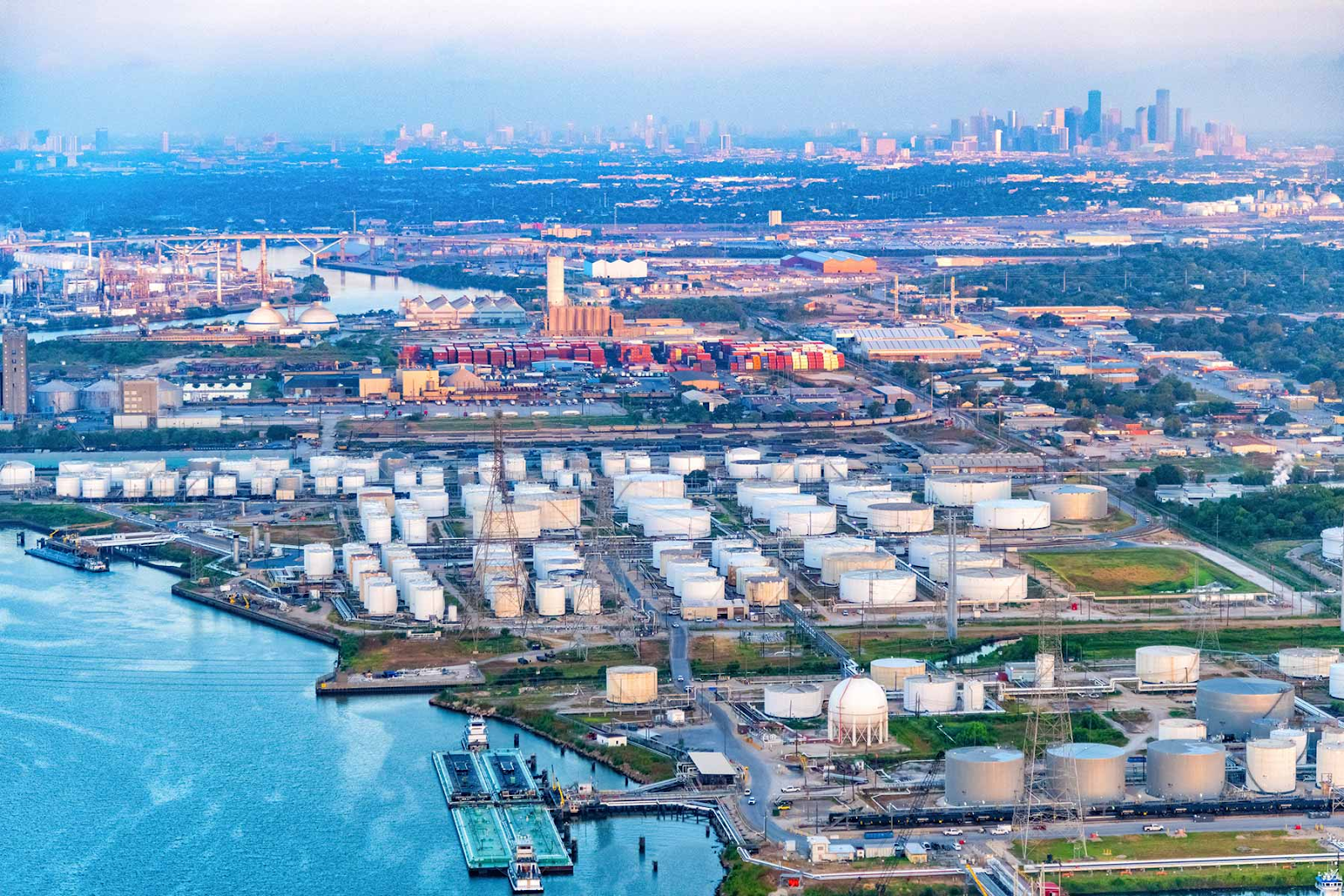
But it wasn’t just elite architecture that underwent a transformation. The industrial zones of East Houston became true industrial strongholds, with oil wells, pipelines, derricks, and refining plants operating 24/7.
Oil as a Social Instrument
Equally important, this fossil fuel wealth became a powerful lever of influence in the city’s social life. Thanks to the philanthropy of oil magnates, Houston saw the construction of:
- The first free libraries (such as the Houston Public Library, supported by oil industrialists).
- Museums and exhibition centers, funded by oil foundations.
- Hospitals and institutions, notably the Texas Medical Center, which grew through contributions from oil capital.
Houston in Oil Culture
This strategic commodity also gave the city its own distinct “culture.” Oil dynasties emerged—families who passed down businesses and influence through generations. Leading Houston schools included geology, drilling, and chemistry in their curricula. Even in local literature and cinema, “black gold” themes held a special place; the oil worker in Houston was a hero, an antagonist, and a symbol of change.
In essence, oil didn’t just change the city—it recreated it. Thanks to this resource, Houston transformed from a provincial Southern outpost into a global energy capital with a deep impact on U.S. industry, culture, and urban development.

Born from Oil and Water
Next, let’s talk about another crucial factor in the city’s rise: the Port of Houston. Officially opened in 1914, its history is closely tied to the oil boom we just discussed. When the first major oil deposits appeared in the region, the city desperately needed a convenient, deepwater, and reliable channel for transporting petroleum products. This led to the massive reconstruction of the natural Buffalo Bayou riverbed, which eventually became the navigable Houston Ship Channel—an engineering marvel of its time.
Thanks to this channel, oil flowed from Houston to global markets, and in return, the city received machinery, metal, grain, and building materials. The port quickly grew into a logistics hub of national significance.
Impressive Numbers
Today, the Port of Houston is more than just a dock. It is:
- #1 in the U.S. for international cargo volume (according to the U.S. Army Corps of Engineers).
- Home to over 200 private and public terminals along the Ship Channel.
- Linked to over 1.35 million jobs in Texas through its activities.
- Responsible for generating over $330 billion in U.S. GDP through related industries.
Port and City: Mutual Evolution
Houston wouldn’t be what it is today without its port. But the port also developed thanks to the city. Houston’s universities train specialists in logistics, energy, and engineering. The city’s infrastructure adapted to the needs of this industrial giant, with new highways, railway hubs, and transport centers emerging. The port became not just an economic factor but a symbol of strength, resilience, and global thinking.
Another Element of Strength
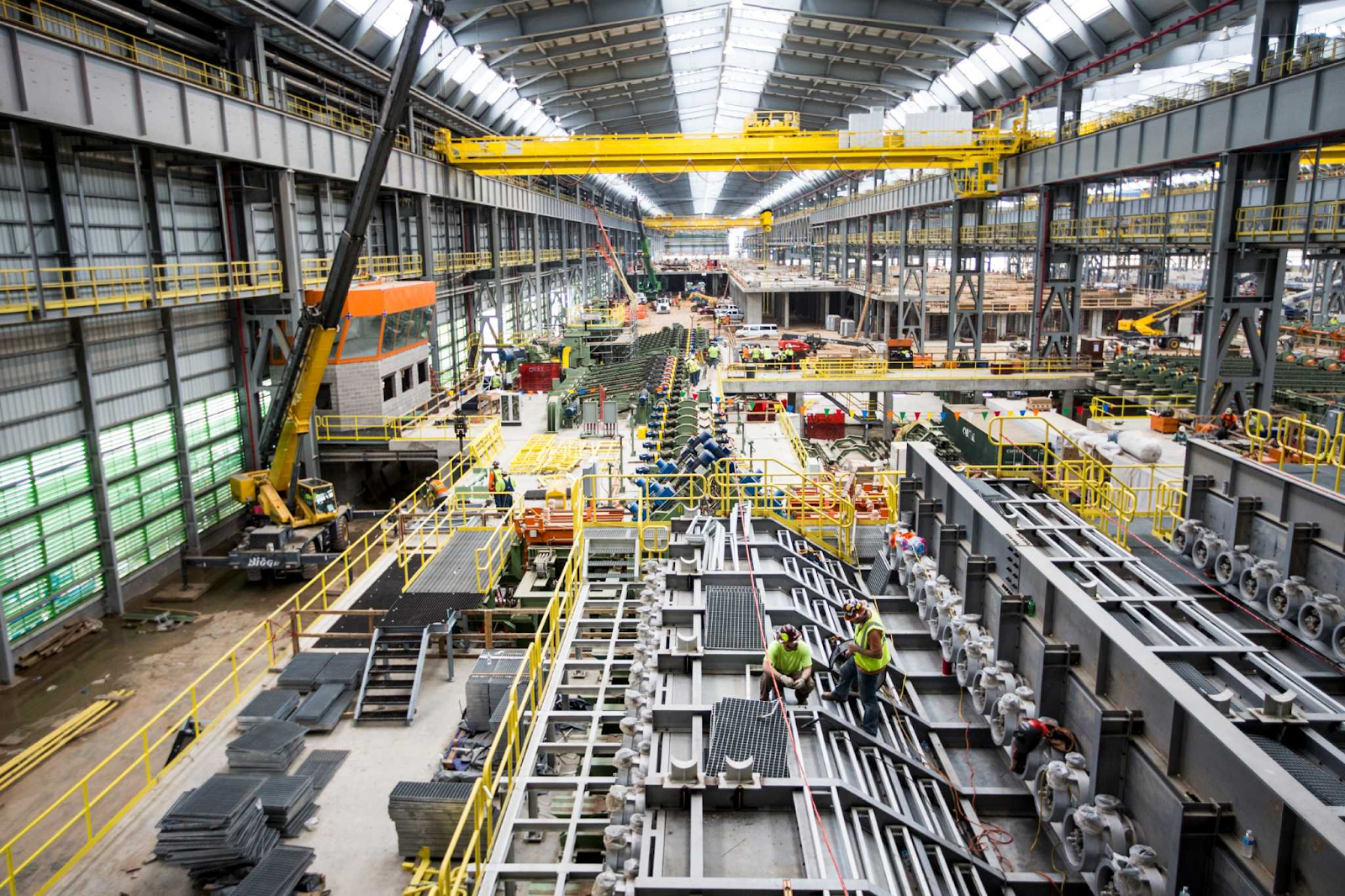
In the first half of the 20th century, dozens of heavy industrial enterprises began to appear on the outskirts of Houston: steel mills, shipyards, and chemical plants. The steel industry, in particular, flourished, driven by the demand for pipes, tanks, and drilling equipment. Local factories weren’t just making steel; they were shaping the region’s industrial independence. This created a symbiosis of industries. Oil needed steel, and steel was fueled by oil. In Houston, these two industries merged into a powerful industrial tandem, where one fed the other.
Texas’s Detroit? Not Exactly. Better.
Unlike many industrial cities in the Northern U.S. that experienced decline in the latter half of the 20th century, Houston successfully adapted to the global market. Thanks to a diverse range of sectors—energy, metallurgy, logistics, engineering—the city moved beyond a “mono-industry” focus. And although steel production may have decreased and factories modernized, the spirit of industrial breakthrough never faded here.
During World War II, Houston became a vital home front center, supplying fuel, materials, and equipment to the Allied forces.
Houston’s Industrial Milestones (1900–1960)
| Period | Key Events | Impact on Industry |
|---|---|---|
| 1901–1914 | Beginning of the oil boom, Spindletop development | Formation of the oil economy |
| 1914–1930 | Opening of the Ship Channel, growth of refining | Expansion of logistics and exports |
| 1930–1945 | Great Depression, wartime production | Reorientation to military industry |
| 1945–1960 | Infrastructure boom, private business flourishing | Establishment of Houston as an energy capital |
In Conclusion
Industrial old Houston is a story of how dirty hands and brilliant ideas forged a metropolis of the future. Here, every derrick isn’t just a technical structure; it’s a symbol of national breakthrough. While today the city is associated with space and high technology, it’s worth remembering that it all began with oil, steel, and ambitious dreams of economic independence. Houston is a living machine where steel and black gold shaped not only the industrial landscape but also the city’s character: strong, energetic, and always ready for the challenges of a new century. If you’re looking for an example of how industry shapes identity, old Houston stands out as one of the best answers.