

Today, Houston is a global metropolis, a space hub, the oil and gas capital, and one of the busiest ports in the U.S. But in the 19th century, it was a completely different story. The city, founded by the Allen brothers, emerged from a swampy, mosquito-infested area. So, how did this humble settlement transform into a powerful economic engine for Texas, laying the groundwork for its future prosperity? Let’s take a look back at the formation of the city’s economy on houston1.one. This is a story of determination, strategic vision, and tireless effort.
Ambitions Take Root (1836 – 1850s): From Dream to First Successes
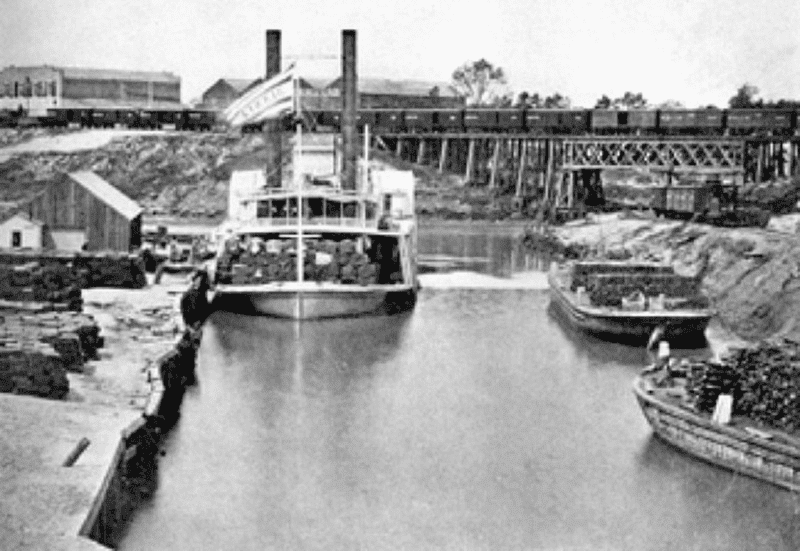
Houston’s business story began on August 30, 1836, when the aforementioned brothers, Augustus and John Allen, published an advertisement announcing the founding of a “new great city” on the banks of Buffalo Bayou. Their ambitious idea was to create a port that would facilitate trade with the interior regions of Texas. However, reality was harsher: the early years were filled with struggles against disease, a lack of infrastructure, and competition from other cities.
Buffalo Bayou became the key factor for survival and development. Although it was a small river, it was deep enough only for small steamboats that transported goods and people. The initial investments went into clearing the river and building docks. This allowed Houston to become a reception point for cotton—the main cash crop of Texas at the time. Farmers from the surrounding lands brought their harvested white fiber, which was then shipped downriver to Galveston and from there to global markets.
The Era of Cotton and Railroads (1850s – 1890s): A Pivotal Hub
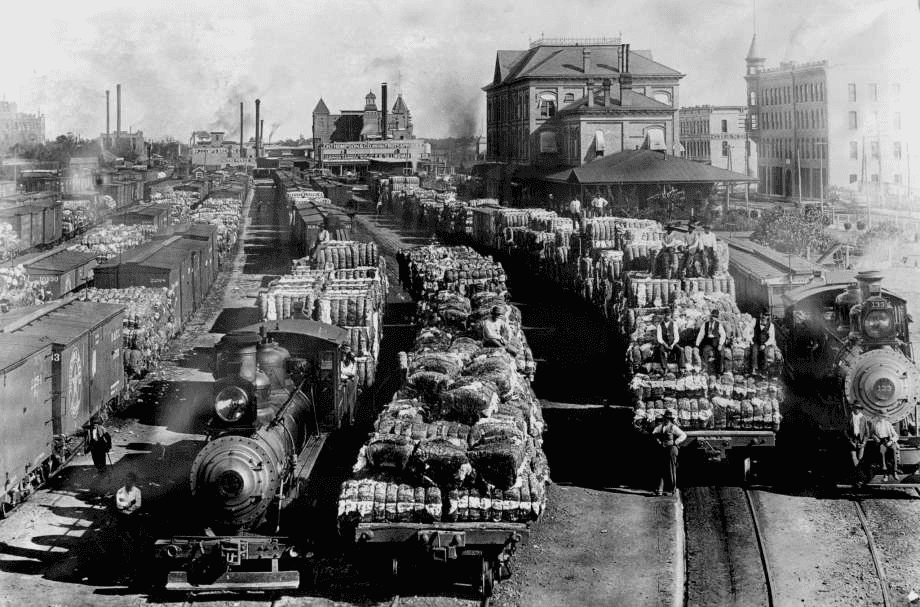
Houston’s real economic breakthrough came with the intensive construction of railroads. City leaders understood that relying on water transport limited growth. They actively invested in and lobbied for the construction of railway lines, aiming to make Houston the state’s central railway hub. No expense was spared for this goal.
By the Civil War (1861-1865), Houston already had several converging railway lines. This strategy proved incredibly successful. The city became the main cotton collection center in Texas, with cotton arriving from all corners of the state by rail and then shipped by sea. This attracted merchants, financiers, and cotton-processing businesses to the city.
Key Factors in Houston’s 19th-Century Economic Growth
Today, we can say that the city founders’ vision could have easily remained an unrealized project. The terrain, climate, and difficult accessibility all had the potential to hinder the city’s establishment. However, the brothers’ faith and ambition, along with effective advertising, managed to leverage that small percentage to establish Houston. Here are the factors that contributed to this:
- Strategic geographical location: Buffalo Bayou’s connection to the Gulf of Mexico.
- Cotton as a driving force: Texas’ main export crop.
- Investments in railroads: Transforming the city into a transportation hub.
- Development of port infrastructure: Constant deepening and widening of the channel.
- Entrepreneurial spirit: The activity of local businessmen and politicians in attracting investments.
Preparing for a New Century (1890s)
By the end of the 19th century, Houston’s economy began to diversify. In addition to cotton and railroads, other industries developed. The first small manufacturing plants and sawmills emerged, and the banking and financial sectors expanded, serving the growing trade flows.
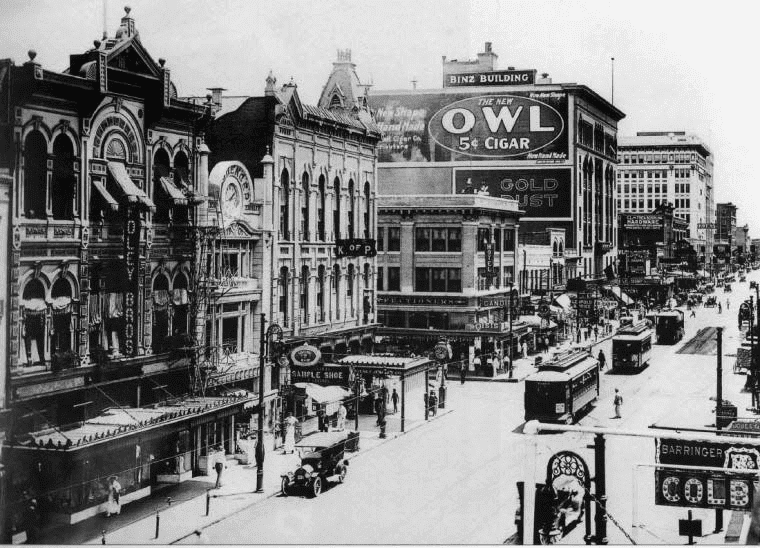
The city actively built up, with brick buildings appearing, streets widening, and urban infrastructure improving, albeit slowly. This period laid a strong foundation for the explosive growth that awaited Houston in the 20th century with the discovery of massive oil fields. The 19th-century entrepreneurs, who tirelessly worked to develop the port and railroads, had no idea that these very infrastructure solutions would become the ideal springboard for the future “oil boom” that would transform Houston into a global energy capital.
Major Stages of Business Development in Houston in the 19th Century
| Period | Key Economic Drivers | Main Business Activities | Characteristics |
|---|---|---|---|
| 1830s-1840s | Buffalo Bayou, founders’ ambitions | City founding, trade (primarily agricultural products), land speculation | Laying the groundwork, struggling for survival |
| 1850s-1860s | Cotton, beginning of railroad construction | Cotton trade, steamboat companies, early railway companies | Rapid growth as a cotton center, beginning of industrialization |
| 1870s-1880s | Expansion of railway network, port | Trading companies, logistics, early banks, agricultural processing | Emergence as a regional transport and trade hub |
| 1890s | Diversification, infrastructure | Development of financial sector, sawmills, small-scale manufacturing, preparation for modernization | Laying the foundation for future industrial booms |
In Closing
The 19th century for Houston was a period of persistent establishment. From a dream on swampy land to the formation of an influential trading and transportation hub, every step was the result of foresight and tireless effort. This period, perhaps not as glamorous as the next century’s explosive economic growth, nevertheless laid the crucial infrastructure and economic foundation. Without this groundwork, modern Houston would be impossible.