

In 1836, the Allen brothers founded Houston, and by the following year, the city’s population exceeded 1,000 people. Excessive crowding and a small urban area caused frequent fires. Firefighting is a structural part of Houston’s development, evolving from horse-drawn steamers to the use of motorized devices. Read more about how the city fought fire and the work of the first firefighters at houston1.one.
Homemade fire trucks
Less than two years after the city was founded, the first volunteer fire brigade, Protection No. 1, was created. It was organized by Augustus Allen. Houston’s first fire truck was a homemade one – a large wooden box with wheels, a pump and a hole attached to the bottom of the pump. The pump pumped water from a cistern into the box, from where the water was pumped into a hose. This original machine stood at Market Square.
In Houston, where wood is the most common and convenient building material, building fires have always provoked serious concern. In 1858, Hook and Ladder Company Fire Station No. 1 was organized. The fire engine was again a homemade one, constructed from a truck. In 1852, the Liberty Fire Company No. 2 fire station was organized, which had the first steam engine four years later. As the city grew, so did its fire department. Gradually, new fire stations appeared in the city. At that time, Houston was divided into 6 districts with very clear boundaries.
Establishment of a paid service
In 1894, most of the wooden complex of the St. Joseph’s Infirmary burned to the ground, and two nuns died. After this incident, the city’s leadership insisted that the services of city firefighters become paid. In 1895, the paid Houston Fire Department was established.
At the turn of the 19th and 20th centuries, the Houston Fire Department used horse-drawn steamers. Over the next decade, the department made the transition from horse-drawn to motorized vehicles. By 1904, the department consisted of 129 members and 11 stations.
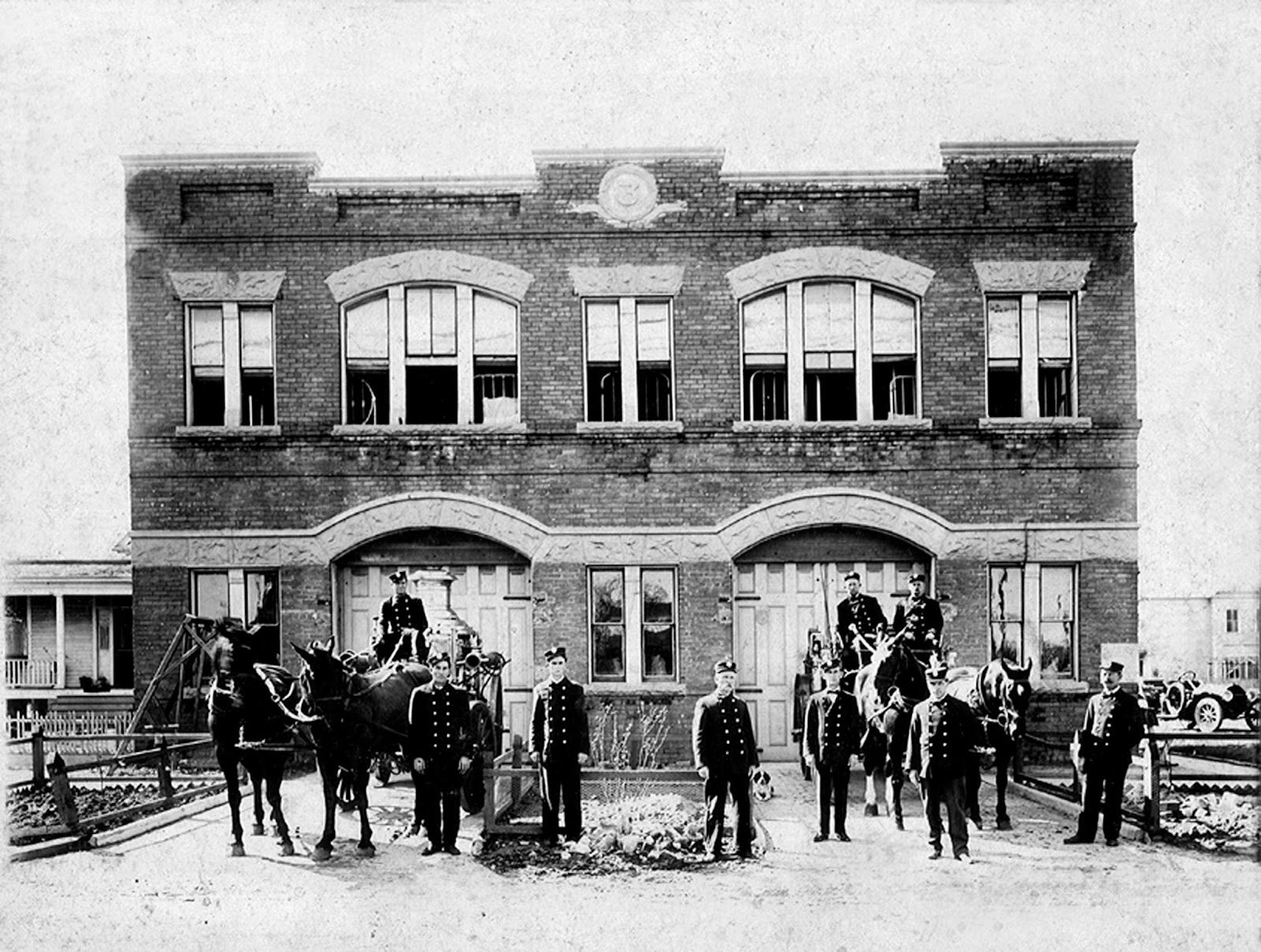
Around 1912, a fire truck capable of directing water to the upper floors of new tall buildings appeared in the city. In 1920, the truck was motorized. Houston’s first fireboat was purchased in 1926 for $320,000 and was stationed at the foot of Manchester Street.
In February 2011, the headquarters of the Houston Fire Department moved to the city center. The windows of its offices overlook Fire Station 8. The old logistics building on Dart Street is used by other departments of the service.
Difficult and dangerous working conditions
Houston firefighters gained popularity when on March 25, 2014, videos went viral showing them rescuing a construction worker from the eaves of the 3rd floor just as a wall of flames approached him.
Initially, Houston firefighters lived at the stations for 15 days in a row before getting a day off. In 1991, the Houston Fire Department started working 4 shifts of 46.7 hours per week. While in 1895, the service consisted of 45 white men, in the 2020s, the number of firefighters has grown to about 4000 men and women from different ethnic groups.
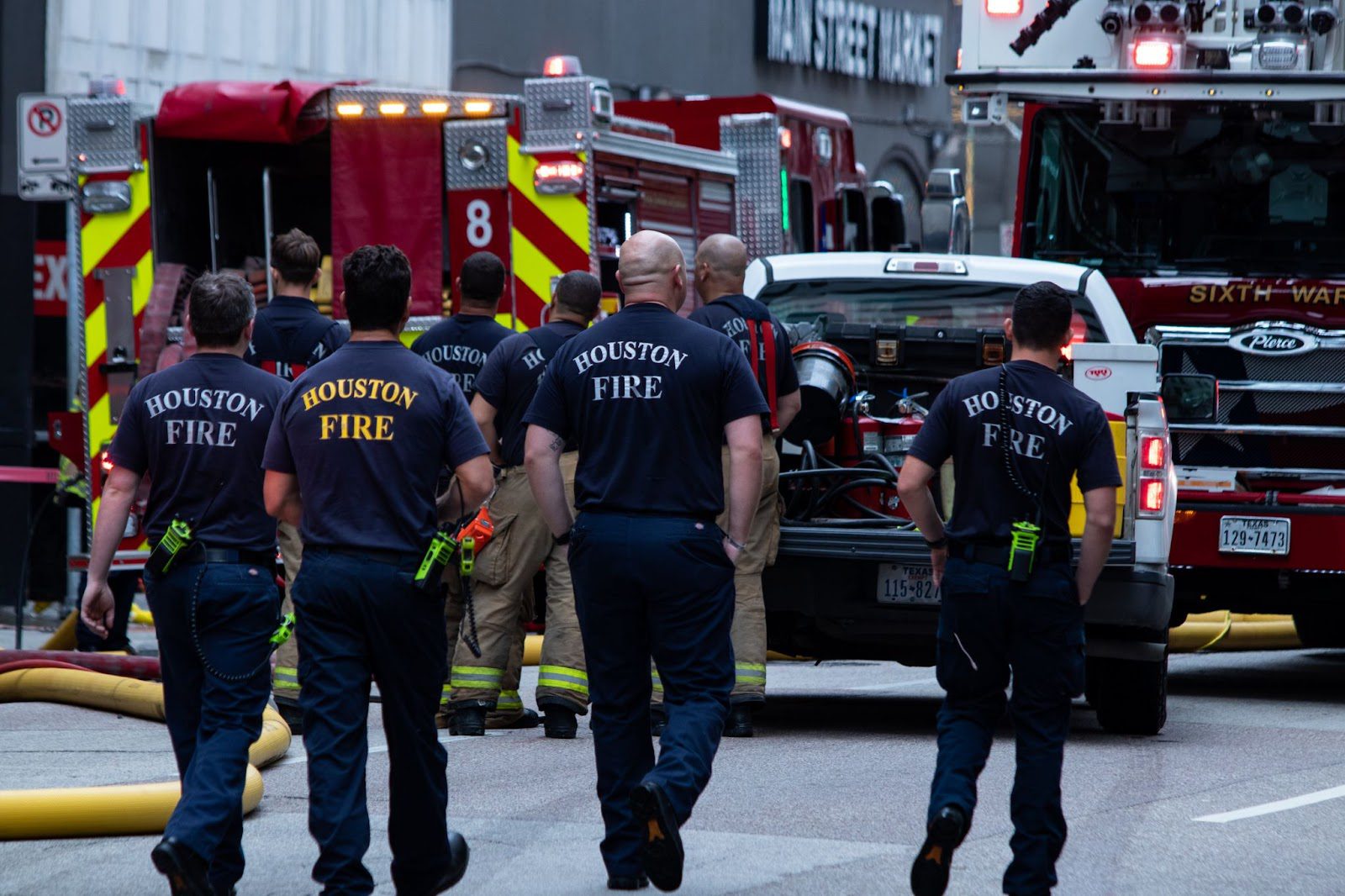
The International Association of Fire Fighters (IAFF) has recognized cancer as a common disease among firefighters. Studies show that firefighters have a higher risk of contracting certain types of cancer compared to other professionals. This is because firefighting installations are complex and contain various hazardous substances. Firefighters can be exposed to hundreds of different chemicals in the form of gases, vapors, and more. Some of these chemicals are by-products of combustion, such as benzene and formaldehyde, which are known to cause cancer. Others come from materials contained in burned debris, such as asbestos from old structures.
Firefighters are constantly in contact with chemicals, inhaling them, transferring them to their skin or eyes. If protective clothing is not properly cleaned, chemicals can contaminate vehicles and the fire station. Reusing contaminated equipment or respiratory protection also leads to exposure to hazardous substances.
Large-scale fires
In 1859, the city experienced its first large-scale fire, which destroyed all buildings except one in a densely populated block in the city center, constructed with wooden structures. The following year, another large fire in a block to the south resulted in the loss of brick structures.
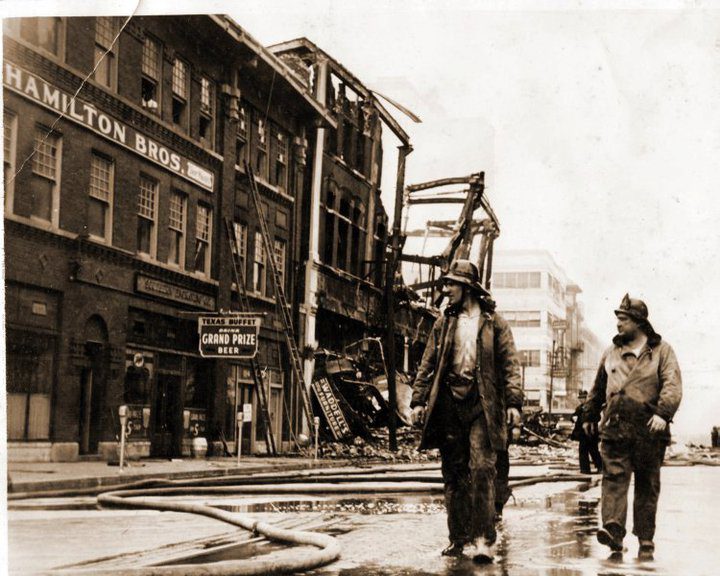
On the cold, windy night of February 21, 1912, the Houston Fire Department faced the biggest fire in its early history. The fire destroyed 40 city blocks northeast of downtown. It originated in a saloon (a type of bar in the Wild West) and then spread to more than 100 homes, 13 industrial plants, dozens of railroad cars, a school, a church and thousands of bales of cotton.
On March 22, 1938, the five-story Waddell Furniture Building at Prairie and Fannin burned to the ground shortly before dawn. Intense radiation heat caused serious damage to at least 16 neighboring structures, including the nearby Christ Church Cathedral.
In addition, a major fire in Houston occurred after midnight on September 7, 1943, at the Gulf Hotel, which served tourists, workers and homeless men. Since smoking was commonplace at the time, mattresses often caught fire. Someone quickly extinguished the fire with water, but the night manager placed a still-burning wet sack of cotton wool in a closet at the foot of the only staircase to the hotel. Soon, the residents went to bed, after which flames and smoke engulfed the open sleeping areas. Men who managed to wake up before dying in their sleep jumped out of the windows, most of them to their deaths. The fire claimed the lives of 55 people.
The fire at the Woodway Square Apartments on July 31, 1979, was the first 7-alarm fire in the history of the Houston Fire Department. Over 300 apartments in the complex, mostly covered with wood shingles, were destroyed. This led to a city ordinance that restricted the use of shingles for construction purposes.
In April 2003, a fire broke out at Station No. 61 when its employees were cooking fish for dinner and forgot to turn off the stove. An alarm sounded at the station 45 minutes later. Firefighters immediately responded to the thick black smoke, but the kitchen, recreation room and captain’s room still burned down.
Houston Fire Museum
The Houston Fire Museum is located in the historic Fire Station 7, the first fire station built after the establishment of the Houston Fire Department. The historic building has Romanesque architecture with brick details.
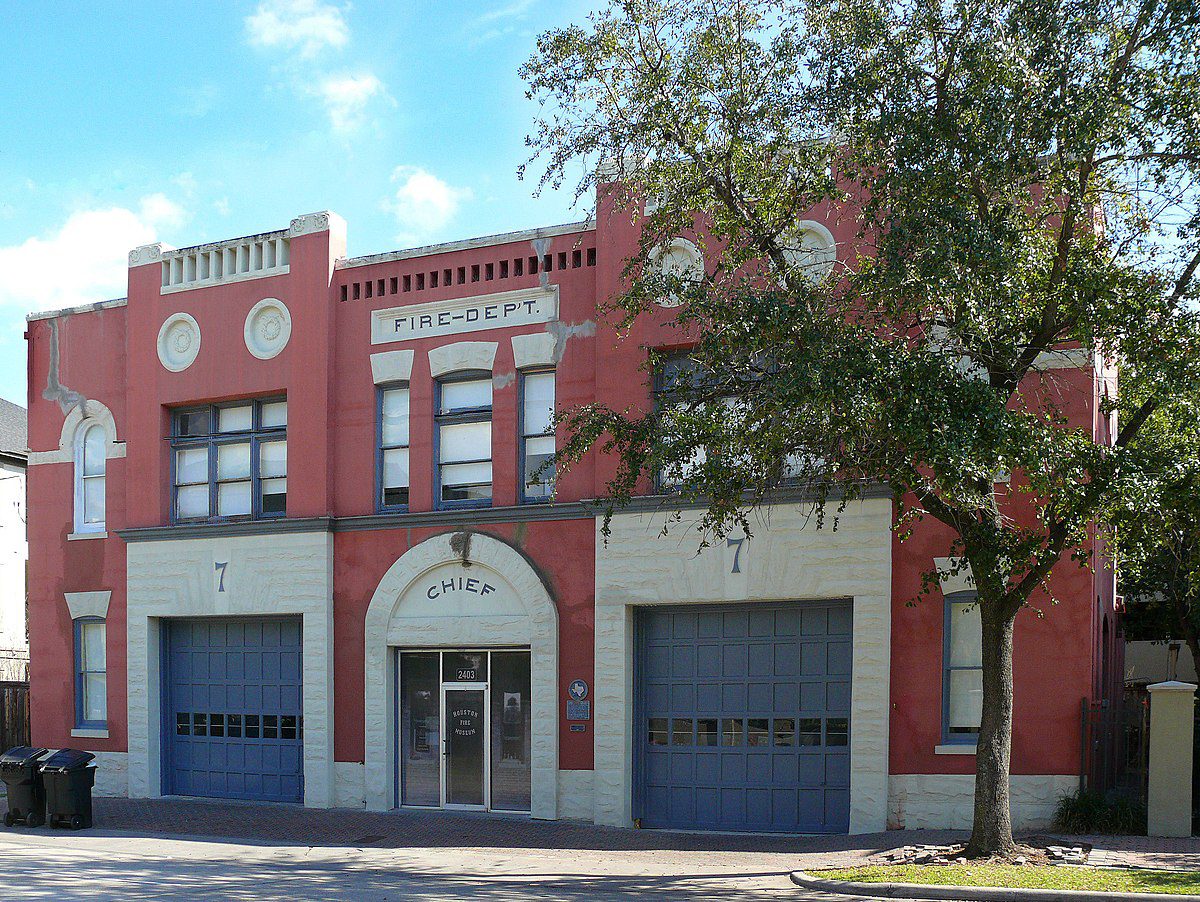
The Houston Fire Museum documents the early days of firefighting in Houston through an extensive collection of photographs, artifacts and archival materials. The museum features interactive exhibits and displays with antique and modern firefighting equipment. The museum’s staff teaches visitors about fire safety.
The museum’s gift shop and online store offer a wide range of memorabilia and exclusive products, including shirts, hats, souvenirs, and much more.