

Howard Hughes is a Houston-based aviation pioneer, director and film producer
After Howard Hughes inherited his family’s successful oilfield tools business, he began investing in films. The Houston billionaire gained fame not only through various businesses and films but also for his unusual personality, including his eccentricity and reticence. Read more about one of the richest people of his time at houston1.one.
Millionaire at 18
Howard Robard Hughes Jr. was born on December 24, 1905, in Houston to the family of Allene Stone Gano and Howard Robard Hughes Sr., a successful inventor and businessman from Missouri.
The discovery of oil near Beaumont, Texas, in 1901 marked the birth of the oil industry and motivated Hughes Sr., who had just graduated from Harvard, to move to east Texas and try his hand at wildlife ranching.
Disappointed by the difficulty of drilling hard rock, he developed the remarkable bit, a rotating tool for drilling oil wells. The invention made drilling easier and revolutionized the oil industry, making the Hughes family immensely wealthy.
The younger Hughes demonstrated an early talent for engineering, which led him to enroll at the California Institute of Technology (Pasadena) and Rice University in Houston. After the death of his mother and father in the early 1920s, Howard left his studies and took control of his father’s business, the Houston-based Hughes Tool Company. The 18-year-old became a millionaire.
Hollywood producer and director
In 1926, Hughes moved to Hollywood, where he made films that went over budget and defied censorship. He produced the 1927 Oscar-winning comedy melodrama Two Arabian Knights before starting work on Hell’s Angels the same year. The plot follows two British pilots who fall in love with a socialite during the First World War. The film was innovative for its aerial scenes. Hughes assembled a huge fleet of vintage airplanes and hired many pilots and mechanics for this action-adventure film. Despite not recouping its production costs, the drama was a box office hit. Hell’s Angels was one of the most expensive films of its time.

In 1932, Hughes produced the gangster film Scarface, inspired by the life of criminal authority Al Capone. The movie was a hit and a benchmark for other films of this genre. Lviv-based actor Paul Muni, who played the fictional character Tony Camonte, became the main star.
Later, Hughes produced and directed The Outlaw, a psychological western released in 1943, with events taking place in the Wild West. The film introduced the world to the actress Jane Russell, a sex symbol of the 1940s and early 1950s. The producer dressed the actress in very provocative clothes. He designed a special bra to emphasize her feminine beauty, although it was not used during the filming.

After The Outlaw, Hughes did not work as a director anymore but continued to act as a producer. In 1948, the Houstonian acquired a controlling stake in the classic Hollywood studio RKO Pictures but sold it in 1953. The next year, he bought the entire company and sold it a year later. Hughes remained chairman of the board of the company until 1957.

Contribution to American aviation
In his spare time away from the film industry, Hughes was involved in aviation. In 1932, he founded the Hughes Aircraft Company in California. On September 12, 1935, Hughes set a world speed record for a landplane at 567.23 km/h in an airplane he had personally designed. In July 1938, Hughes flew a Lockheed 14 around the world in a record 91 hours and 14 minutes. He later acquired a 78% stake in Trans World Airlines.

During the Second World War, Hughes focused on military aircraft. His company signed several contracts with the government. In 1946, he flew a Hughes XF-11 spy plane during a test flight and narrowly escaped death in an aviation accident.
Hughes also participated in a CIA plot to recover a sunken Soviet submarine. In March 1968, during the Cold War, a Soviet submarine carrying nuclear ballistic missiles accidentally sank in the Pacific Ocean. The Soviet authorities were unable to find the submarine, but the U.S. managed to do so near Hawaii.
Moving to Las Vegas
In 1950, the introverted Hughes retired to the country. Three years later, he opened the Howard Hughes Medical Institute. The center’s goal was to conduct biological and medical research. In the 1960s, the industrialist refused to appear in court after antitrust charges against Trans World Airlines. As a result, Hughes lost control of the business. In 1966, he sold his shares for over $500 million.
Faced with huge tax bills in California, he decided to move to Las Vegas at the end of 1966, arriving by private train car and taking up residence on the top floor of the Desert Inn. When the hotel owner tried to evict Hughes and his staff to free up rooms for dignitaries, Hughes bought the property. He also acquired other casino hotels, an airport, an airline and various plots of undeveloped land. In the 1950s, he purchased real estate outside of Las Vegas, which later merged into a community as Summerlin.
One day, Hughes, who never left his Desert Inn penthouse, wanted to watch his favorite old movies, but there were no 24-hour TV stations in town. Howard solved this problem in his usual way by buying a local TV station.
After four years in Las Vegas, he became one of the largest employers and private landowners in Nevada. Hughes changed the image of Las Vegas, which was previously associated with the mafia, by attracting more corporate investment.
Mental disabilities and recent years
Howard suffered from severe obsessive-compulsive disorder (OCD), characterized by uncontrollable, repetitive thoughts (obsessions) that can lead a person to perform repetitive actions (compulsions). Hughes always ate the same thing for dinner: a medium-rare New York strip steak, a lunch salad and peas (he chose small ones, pushing the larger ones aside). For breakfast, he always asked for eggs to be cooked the way the family cook, Lili, used to make them. Hughes had a manic fear of germs, typical for those with OCD.
The Houstonian’s tendency to seclusion was often used by fraudsters to their advantage. For example, in 1971, there was a scandal over the alleged memoirs of the reclusive Hughes, which were sold for a total of $1 million. Subsequently, the autobiographical manuscripts were recognized as forgeries.
Hughes kept his last days private, living in luxury hotels where only his assistants could see him. He often worked for days without sleep, never leaving his room, which was curtained off with black curtains. Due to malnutrition and excessive medication, Howard lost a lot of weight. In 1976, he died during a flight from Mexico to Houston, where he planned to receive medical care.
The entrepreneur was married twice: in 1925-1929 to Ella Rice and in 1957-1971 to Jean Peters.
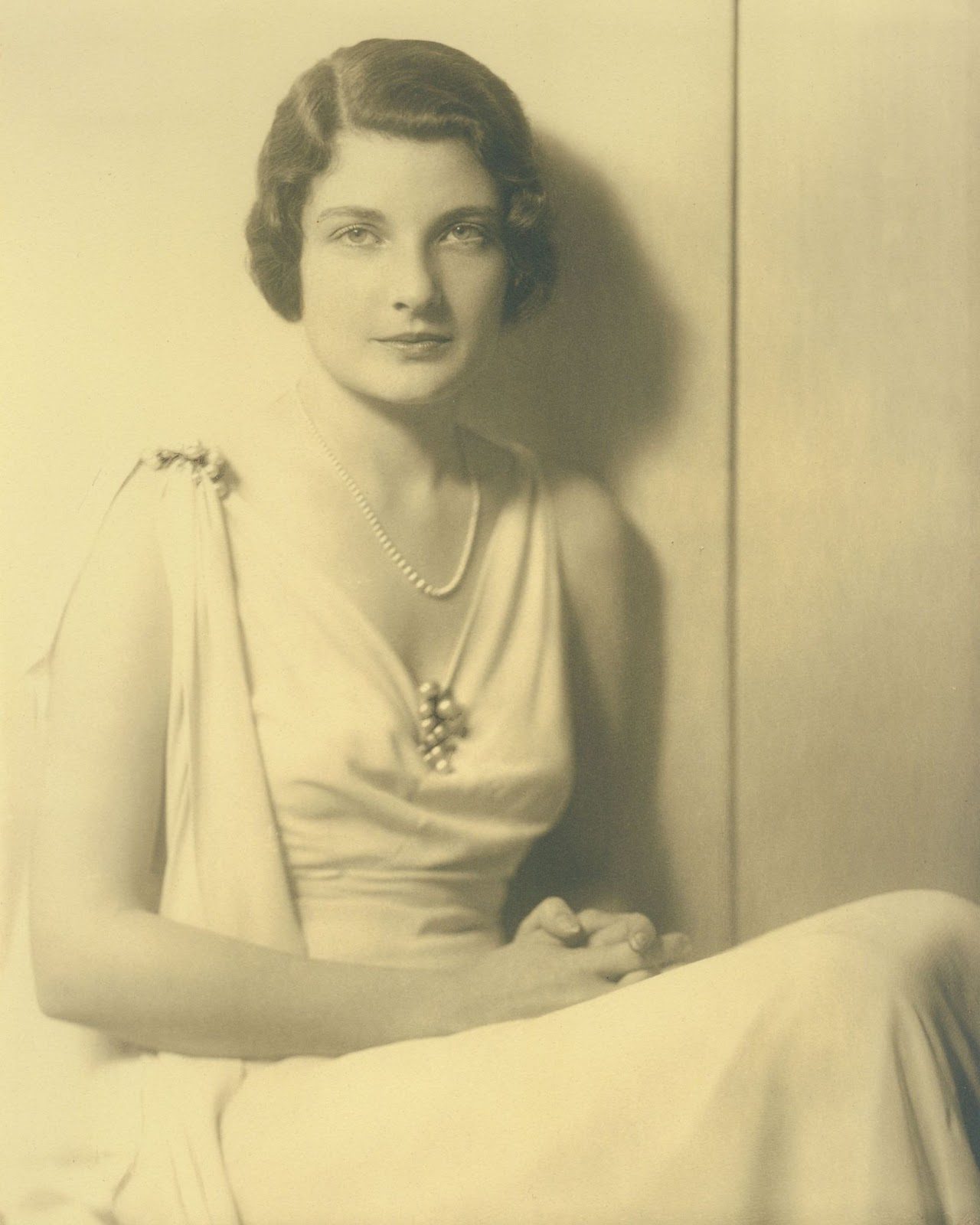
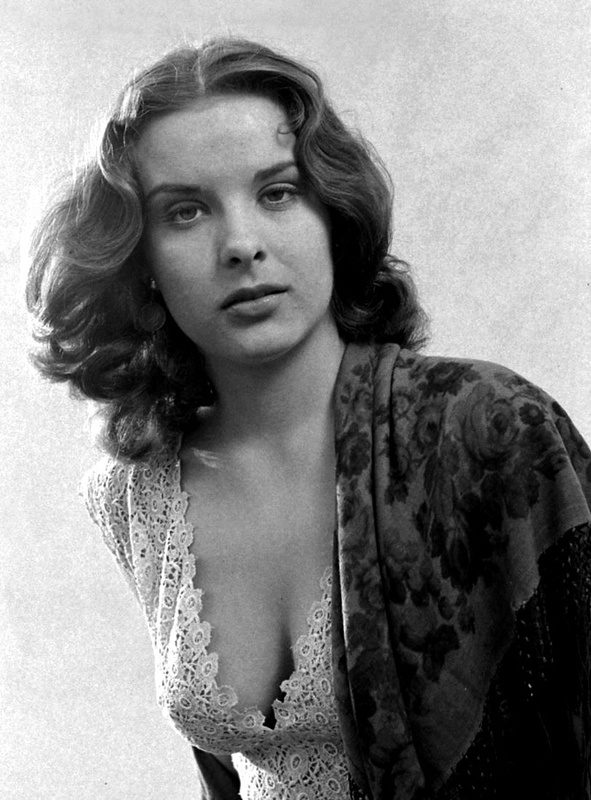
He had no children, and years after his death, a long struggle began to take possession of the billionaire’s wealth. Several “wills” appeared, but all of them were forged.