

Julian Schnabel is a leading figure in American Neo-Expressionism. His work often sparks mixed reactions from critics, yet it remains extremely popular. His paintings sell out long before their official exhibition, fetching prices that reach well into the six figures. The biggest art galleries are eager to display his pieces. Read on at houston1.one for a detailed look at this unconventional artist.
The Start of a Creative Journey
The future artist’s life began in Brooklyn, where Julian was born on October 26, 1951, to Jack Schnabel and Esta Greenberg. In 1965, he moved with his family to Brownsville, Texas. From an early age, he was an extravagant and creative boy. After finishing high school, he continued his education at the University of Houston in the visual arts department. It was at the University of Houston that his style began to form, and he developed a fascination with modern art.
The mid-1970s saw an explosion of new trends in art. This was a period of experimentation, social activism, and pushing the traditional boundaries of art. Artists were moving away from artistic traditions and embracing conceptual and performance art instead. Julian Schnabel eagerly joined this new movement, immediately beginning to search for his creative voice. He graduated from the University of Houston in 1973.
After graduation, the young man moved to New York, where he applied to the Whitney Museum’s Independent Study Program. Following a year-long course, Julian embarked on a journey through Europe. For an entire year, the young artist visited museums in many European cities. He was particularly impressed by the works of Gaudi, Cy Twombly, and Joseph Beuys. Their art had a profound influence on Julian Schnabel’s subsequent vision of contemporary art.
An Artistic Partnership
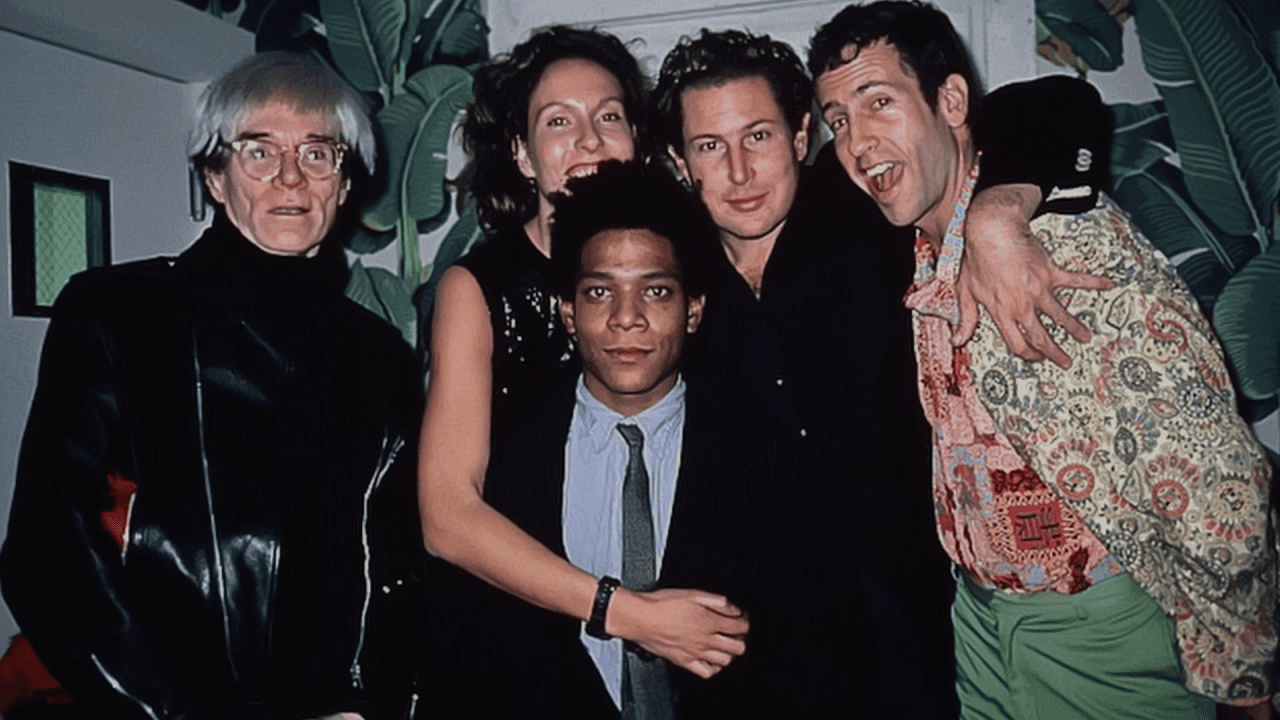
After his unforgettable European tour, Julian returned to Texas. He met local artist Joseph Glasco, who at the time had his own home and studio in Galveston. The young artists bonded and became close friends. Their friendship was based on various common interests, but the most important was their enthusiasm for contemporary art. It was during this period that a new trend in art—Neo-Expressionism—was emerging, and both artists passionately embraced it.
Their friendship was artistically enriching for both. At Julian Schnabel’s urging, Glasco moved to New York. This move was necessary for the artist’s further development, as New York was the center of the art world at the time. Schnabel also introduced his friend to Leslie Waddington, who curated the Waddington Galleries in London. This connection helped Glasco break into the global art scene.
The friends were each other’s first reviewers and advisors on their respective works. They exchanged ideas, techniques, and inspiration.
Houston: The Launchpad for Creativity
In 1975, Julian Schnabel moved to Houston and rented a studio in the Heights neighborhood. The artist made new connections and re-established old ones from his time at the University of Houston. Among his new acquaintances was Jim Harithas, who served as the director of the Contemporary Arts Museum Houston (CAMH). According to Harithas himself, Schnabel persistently asked for a solo exhibition during every meeting. Julian was so insistent that Harithas eventually gave in and agreed to host an exhibition of Julian Schnabel’s works.
The event took place in the museum’s lower gallery from February 20 to March 7, 1976. Critics reacted rather coolly to the new figure in the art world. Charlotte Moser, a critic for ARTnews, wrote succinctly in her review: “Although Schnabel’s paintings are still forming, they have a tangible presence.” But this was just the start. Julian Schnabel had announced his artistic “self” to the world.
The subsequent exhibition at the Mary Boone Gallery in 1979 wasn’t just a breakthrough for the artist—it was a sensation. All of his works were sold out in advance. Schnabel became the trendy artist. Having his work in a collection signified high status for the owner. He was no longer the one asking for exhibition opportunities; applications from galleries were arriving daily. The artist now had the luxury of choosing them himself.
Each subsequent year strengthened the young artist’s position:
- 1980 – Participation in the Venice Biennale, where he exhibited alongside acclaimed artists like Anselm Kiefer and Georg Baselitz.
- 1981 – Participation in an exhibition organized by Boone and Leo Castelli. In the same year, he took part in the legendary “A New Spirit in Painting” exhibition at the Royal Academy of Arts.
- 1984 – Exhibitions at the Pace Gallery.
Characteristics of His Art
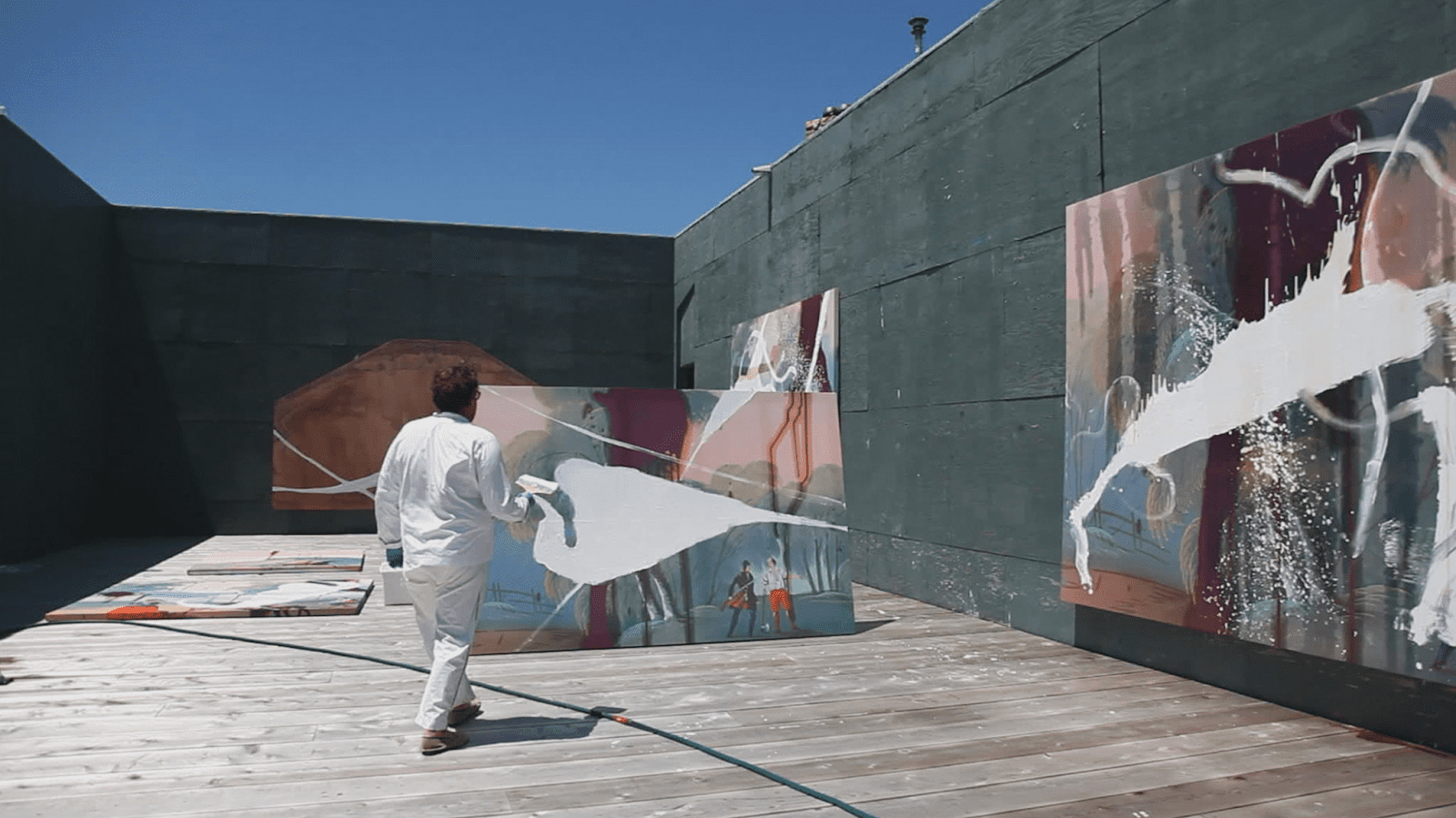
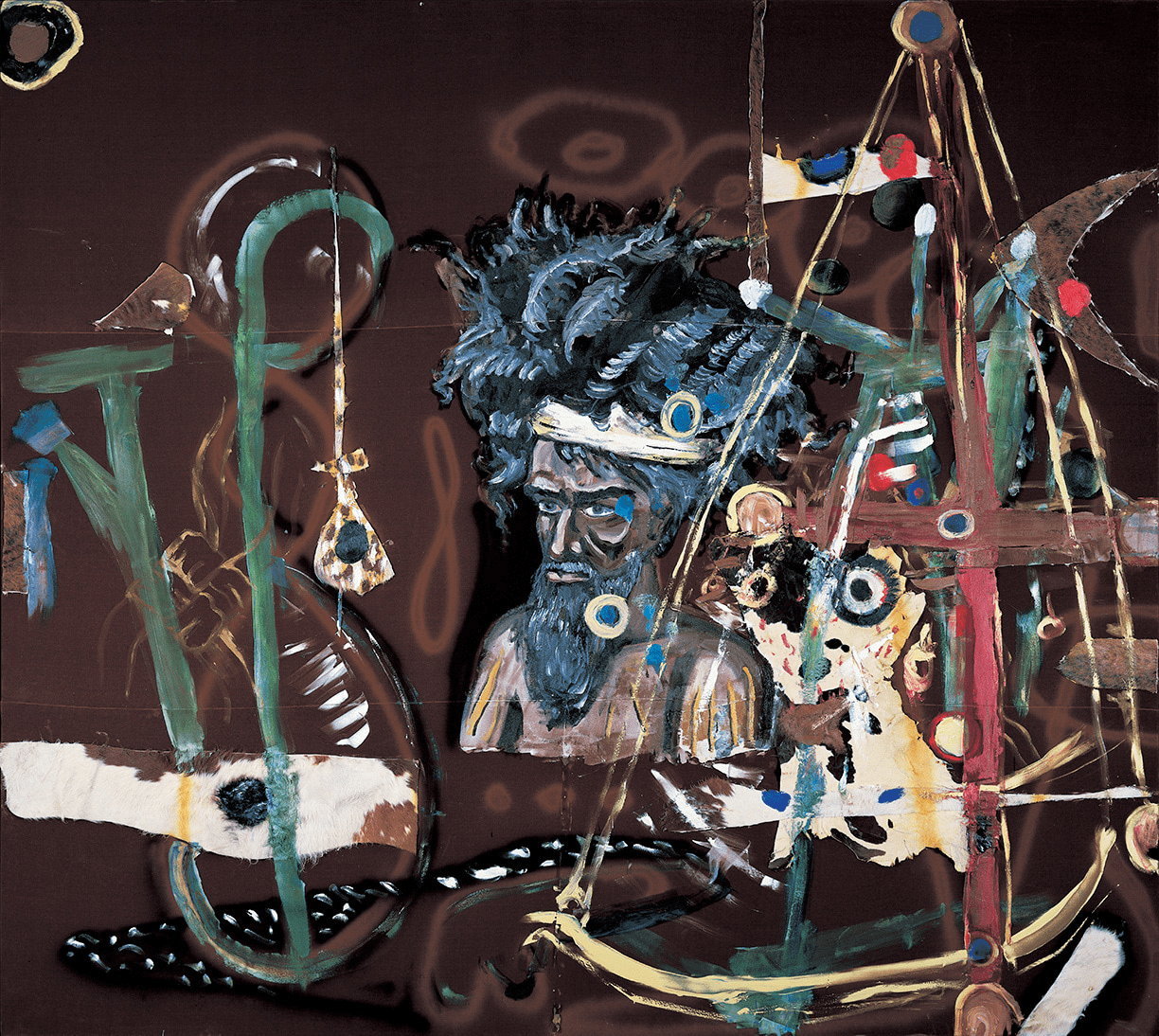
Julian Schnabel announced himself to the world thanks to his distinctive “plate paintings.” He utilized broken ceramic plates shattered into pieces on his canvases. Works executed in this technique became the artist’s signature. They were quite large, as most of his pieces are grand in scale.
Beyond the “broken plates,” the artist incorporates a variety of materials, including plaster, wax, velvet, canvas, wood, and muslin. Schnabel even manages to use such non-traditional art materials as surfboards, antlers, and photographs when creating his masterpieces. On his canvases, the artist blends figural elements with abstraction. The size, weight, and depth of his works give them sculptural qualities, making them a sort of intermediate form between paintings and sculptures.
Julian Schnabel is a versatile artist. For example, he designed the cover for one of the Red Hot Chili Peppers’ studio albums. The band’s album By the Way featured eight tracks, and Schnabel created a separate art cover for each song.
Julian Schnabel entered the new century as a renowned and successful artist. His works have been exhibited in many countries around the world, and his paintings sold at a very rapid pace. Schnabel’s most expensive work sold to date is the painting Ethnic Type #14, which fetched $1,452,000 at a Christie’s auction in 2017.
Julian Schnabel: The Filmmaker
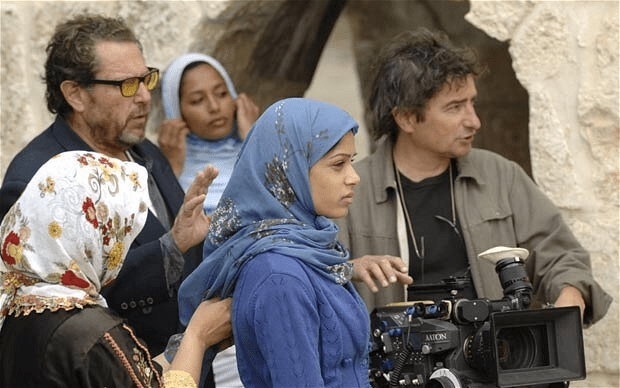
Like most brilliant artists, Schnabel sought to express his creativity in other fields. For him, this new creative outlet became cinema. The first feature film he directed was Basquiat. The film tells the story of the life and work of Schnabel’s friend and colleague, Jean-Michel Basquiat, and was released in 1996. His next work was Before Night Falls, released in 2000, which chronicled the life of Cuban poet and novelist Reinaldo Arenas.
Schnabel’s true breakthrough in filmmaking came with the movie The Diving Bell and the Butterfly. At the 2007 Cannes Film Festival, the film won the award for Best Director. In total, the film garnered 17 awards, including the Golden Globe for Best Director. The film was also nominated for an Oscar. As a director, Schnabel has filmed six movies, all of which received high praise from critics and audiences.
Art as a Lifestyle
Julian Schnabel also tried his hand at architecture, creating the peculiar Palazzo Chupi in the West Village. This architectural creation is easy to spot—besides its unusual shape, it’s bright pink. The artist himself lives in this condominium. The first four floors, which were previously stables, house the artist’s studio. He resides on the upper floors. The artist continues to create, paying little attention to criticism.